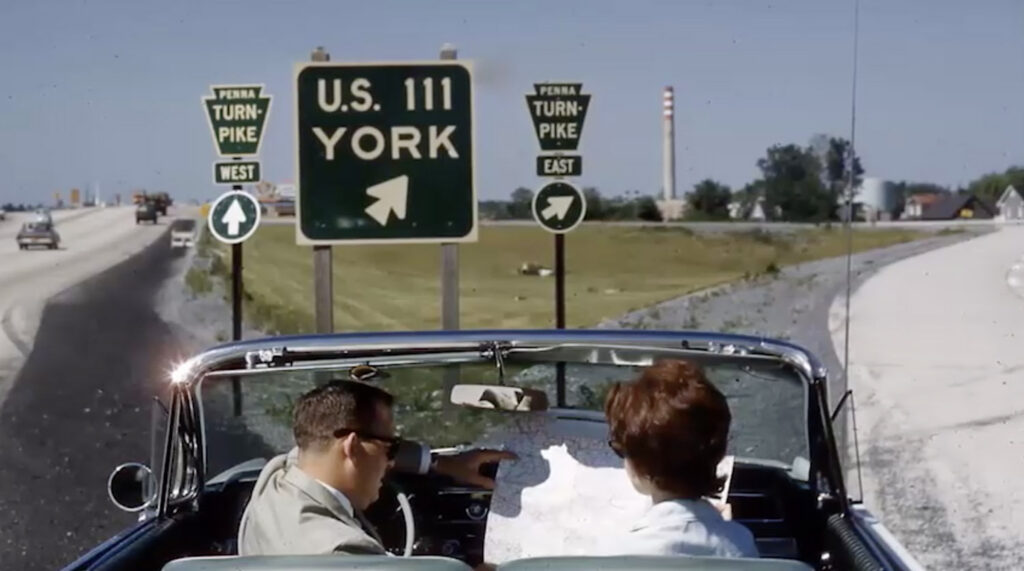
The Pennsylvania Turnpike, which opened in 1940, is often cited as the “World’s Greatest Highway” and served as the blueprint for the modern American interstate system. It was the first long-distance, limited-access highway in the United States, designed to allow traffic to move quickly and safely across Pennsylvania. To provide clear information to drivers at the speeds enabled by this new infrastructure, the newly developed FHWA Series Standard Alphabets were essential. The signs featured all capitals, as the lower case letters would not be designed by the California Division of Highways until 1948. These new rounded letters were engineered for maximum legibility at high speed.
I am sure that artists and designers could be imbued with the ideas the highway engineers desire to express, and that some of best ability in the country could be brought to bear upon the details of the design
R.M. Morton, State Highway Engineer of California



Film
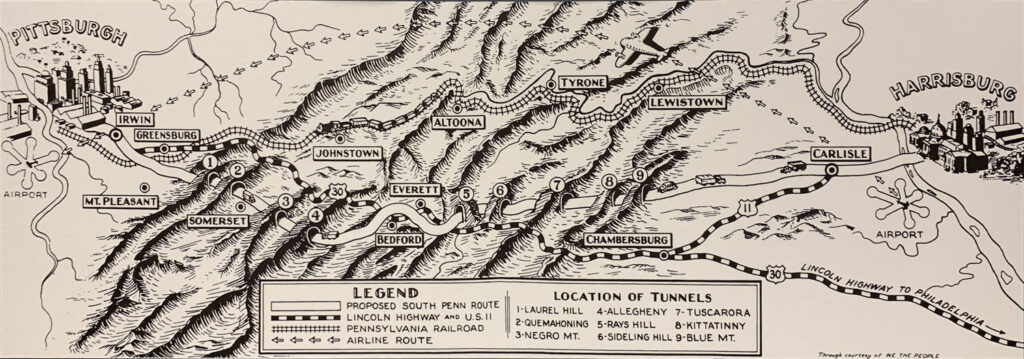
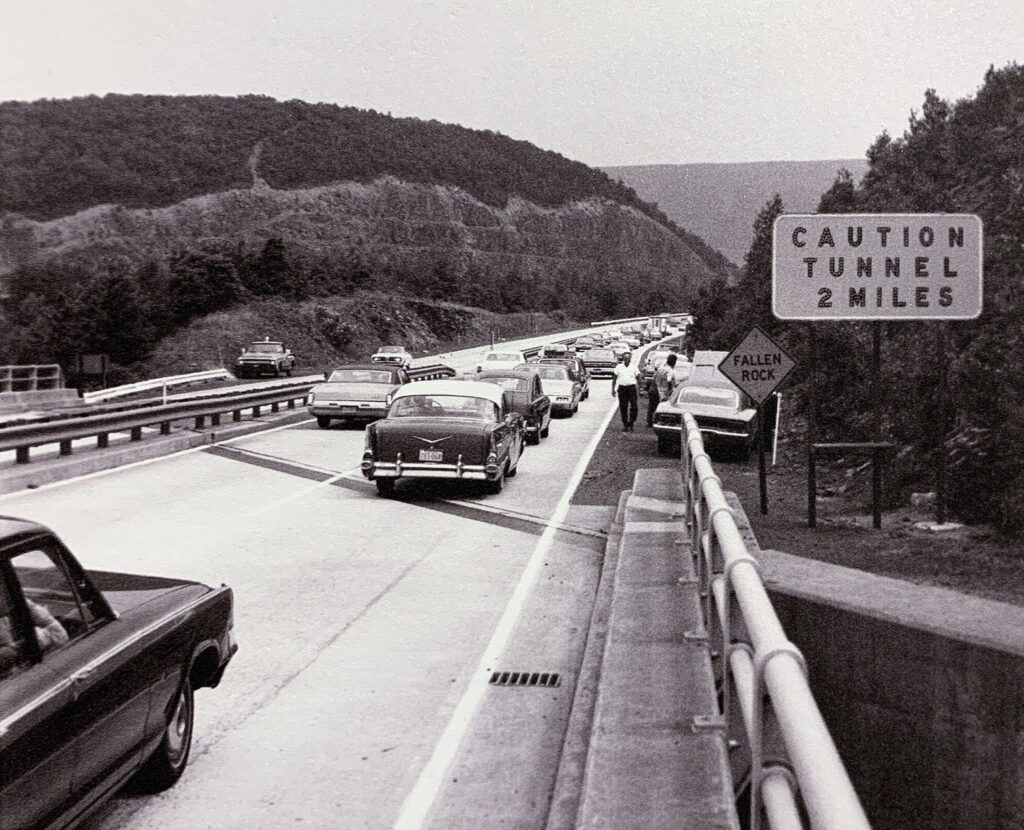
This vintage 1960s promotional film, “A Pioneer… The Pennsylvania Turnpike” celebrates the 470-mile toll superhighway as the “Grandfather of the Interstate System,” tracing its October 1940 opening with an initial 160-mile stretch between Irwin and Carlisle—built over an abandoned 1880s railroad project and carved through the rugged Allegheny Mountains with extensive grading and deep cuts—along with its engineering milestones and advanced safety and traveler services across the Appalachians.