The Manual on Uniform Traffic Control Devices (MUTCD) establishes the national legal standards for signs, signals, and markings to ensure consistency across all public and private roadways. By standardizing the design and placement of these devices, the manual enhances safety and mobility for all users while reducing manufacturing and maintenance costs. Adherence to these guidelines is mandatory, as non-compliance can lead to the loss of federal funding and increased legal liability for agencies. The document remains a dynamic resource, evolving through a formal rulemaking process that integrates research, innovation, and direct input from a broad range of transportation stakeholders.
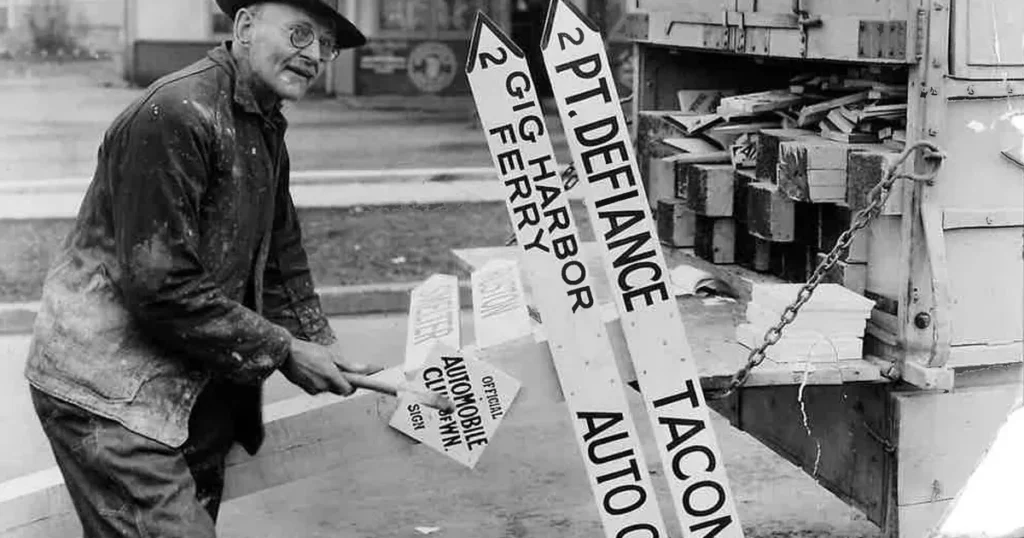
Two Standards Merge
Two different groups of highway engineers and officials each developed standards — one for rural, and the other for urban roads. In 1932, these groups worked together as a Joint Committee to publish one set of standards for all United States roads called the Manual on Uniform Traffic Control Devices abbreviated as (MUTCD).
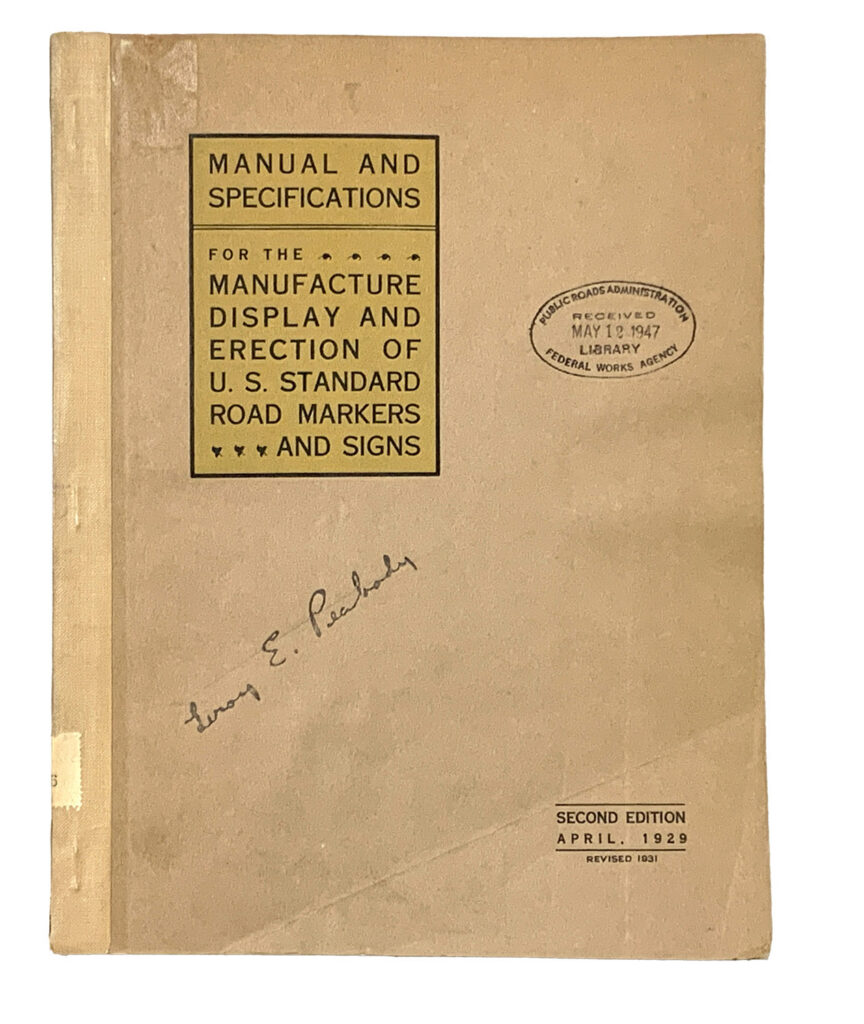
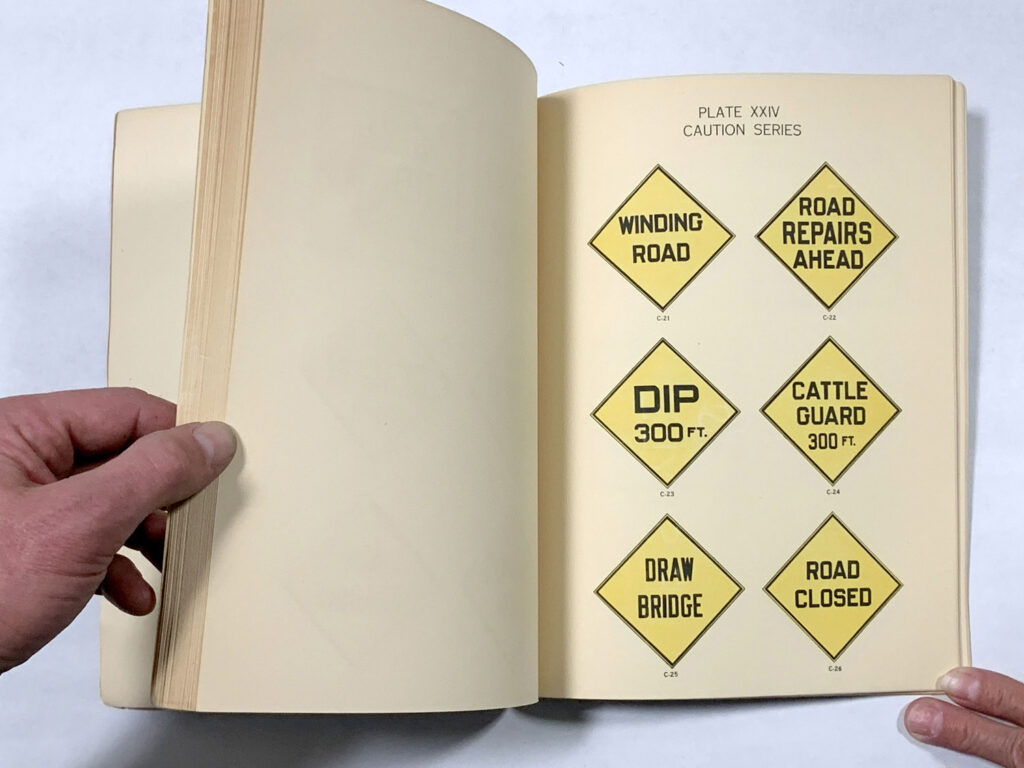
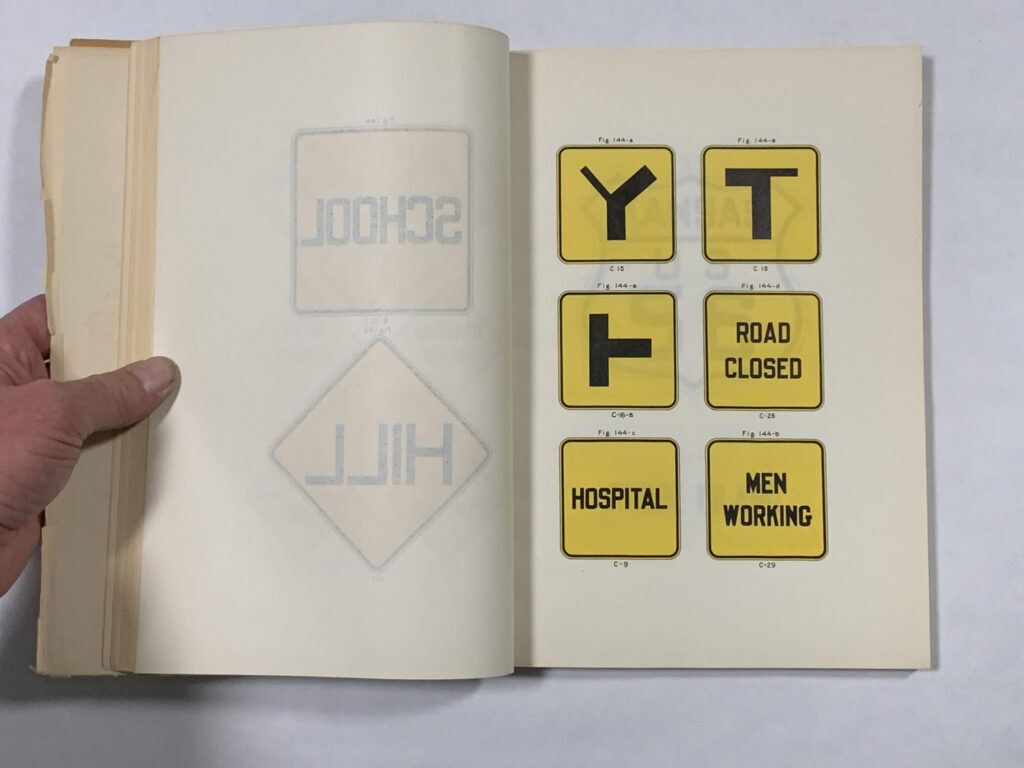
1929 Rural
The 1927 American Association of State Highway Officials (AASHO) manual, titled Manual and Specifications for the Manufacture, Display, and Erection of U.S. Standard Road Markers and Signs, was the first national attempt to standardize signage for rural highways.

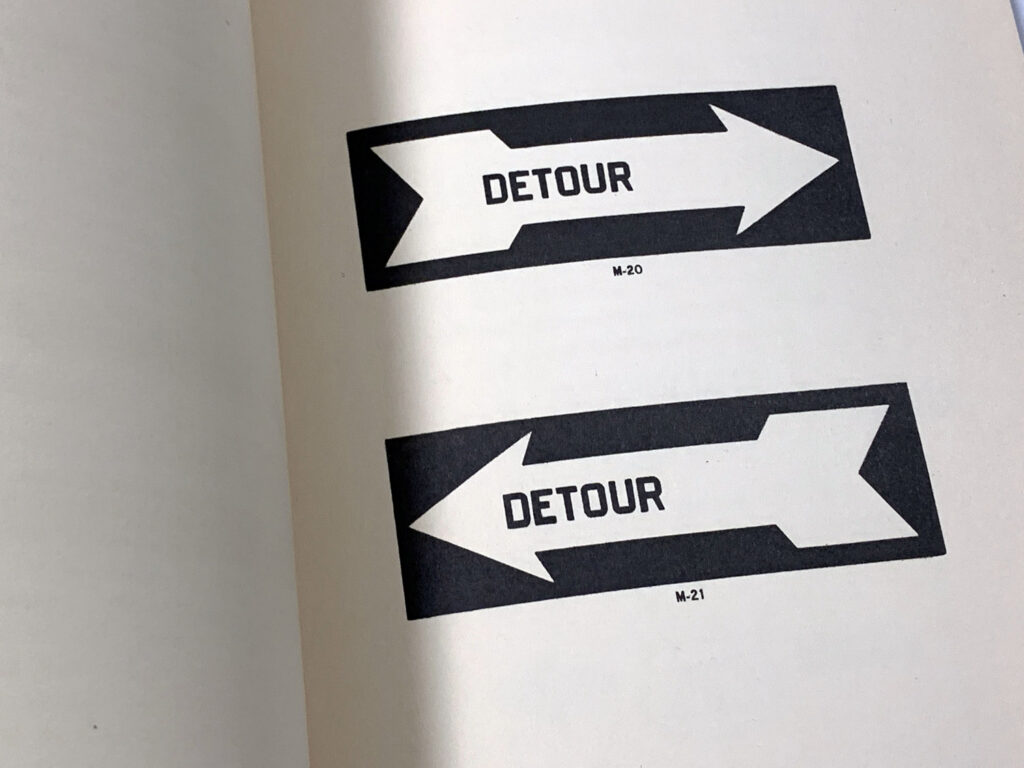
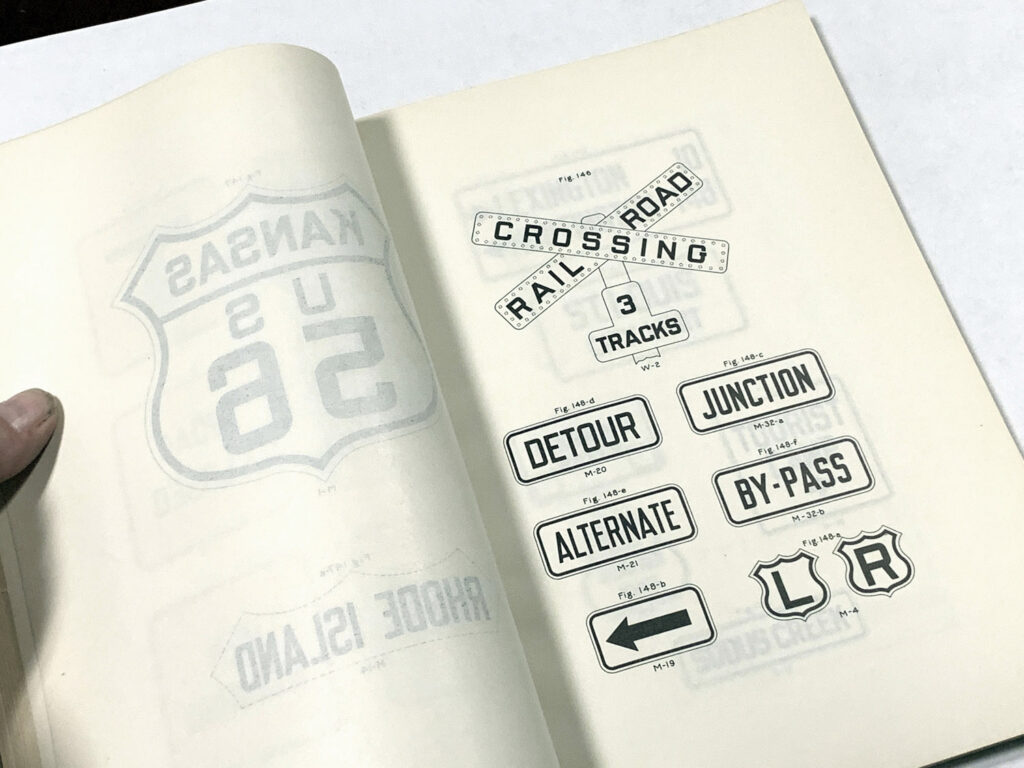
1930 Urban
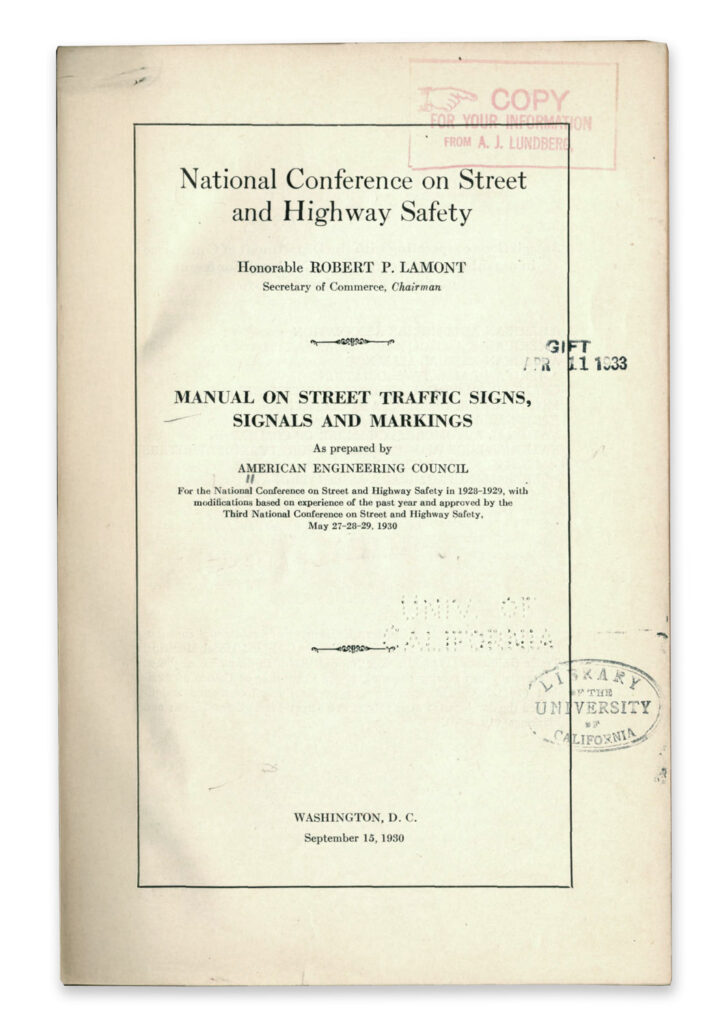
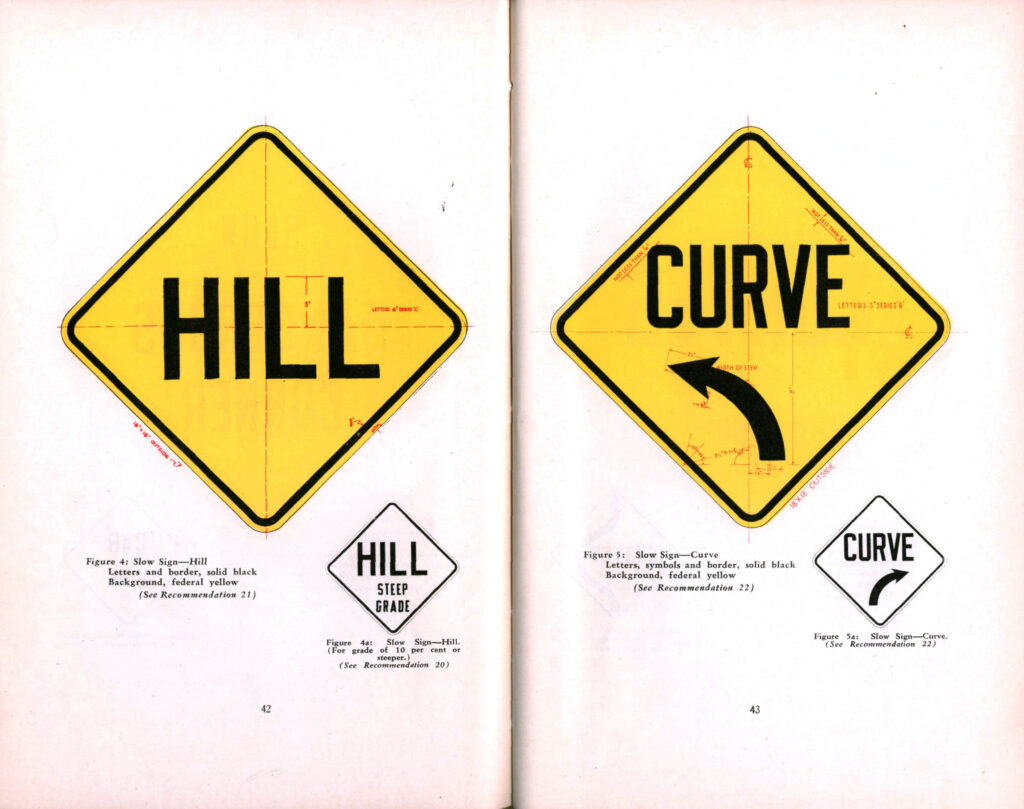
The 1930 Manual on Street Traffic Signs, Signals, and Markings was published by the National Conference on Street and Highway Safety (NCSHS) to provide the first comprehensive set of standards, specifically for urban environments. The document went beyond signage to outline standards for traffic signals, pavement markings, and safety zones. The 1929 Rural and 1930 Urban standards were combined in the 1935 MUTCD.
1935 Urban & Rural
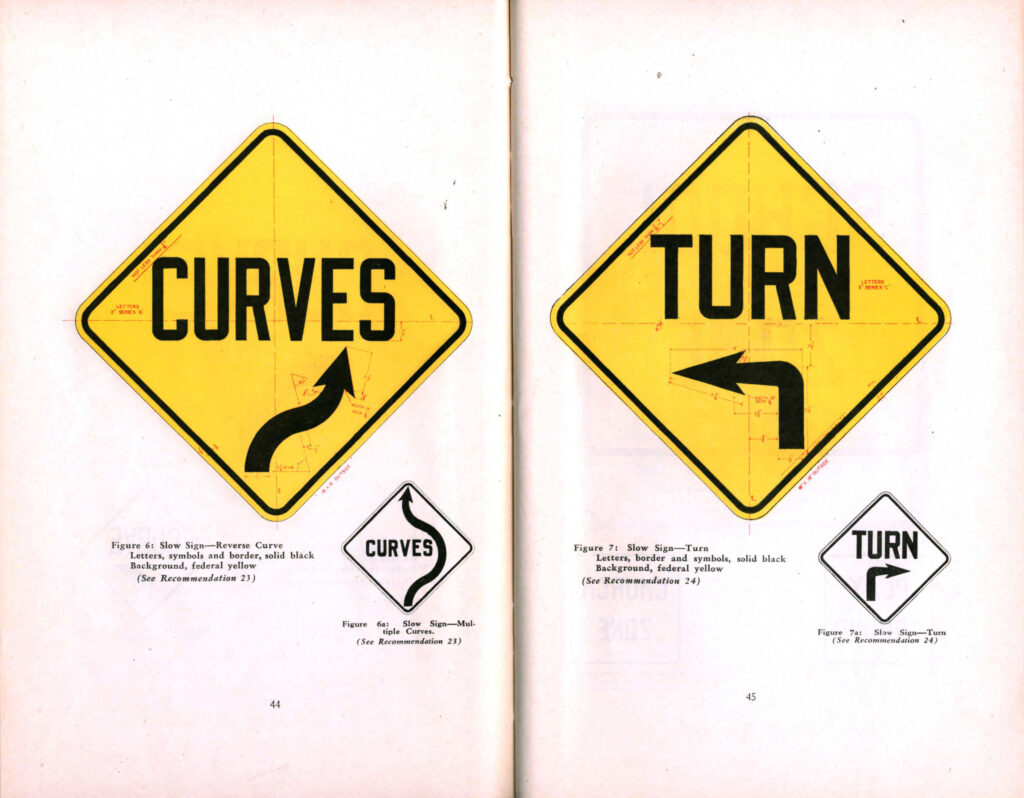
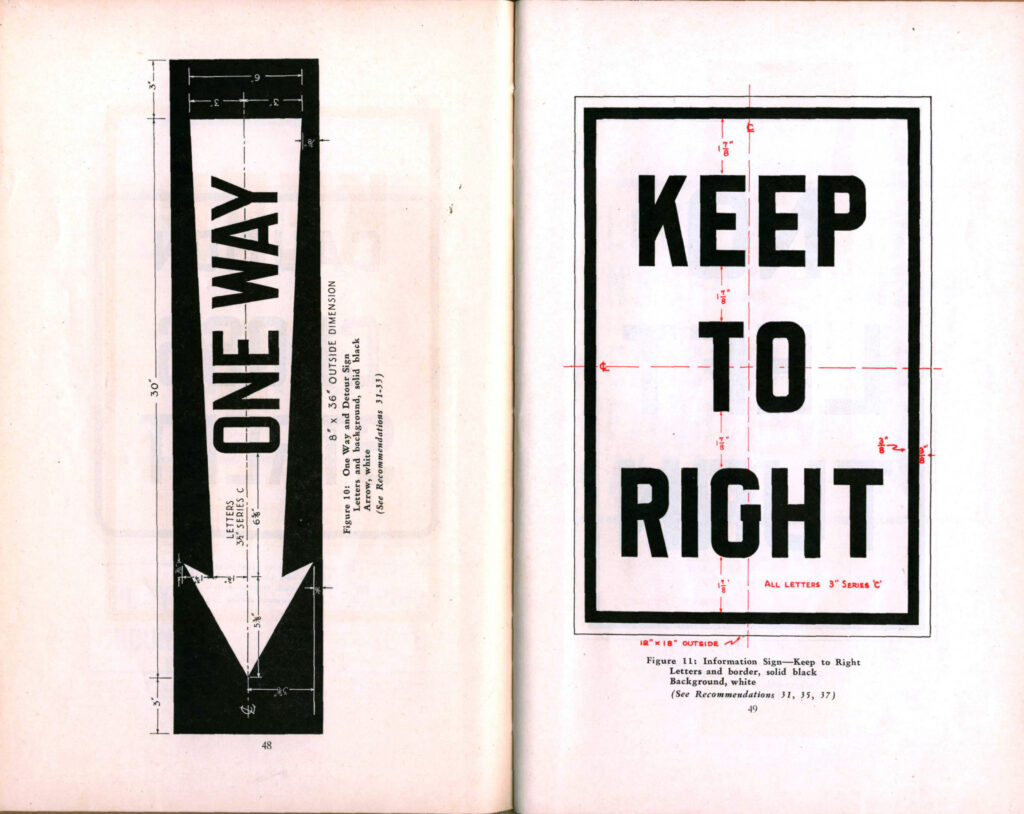
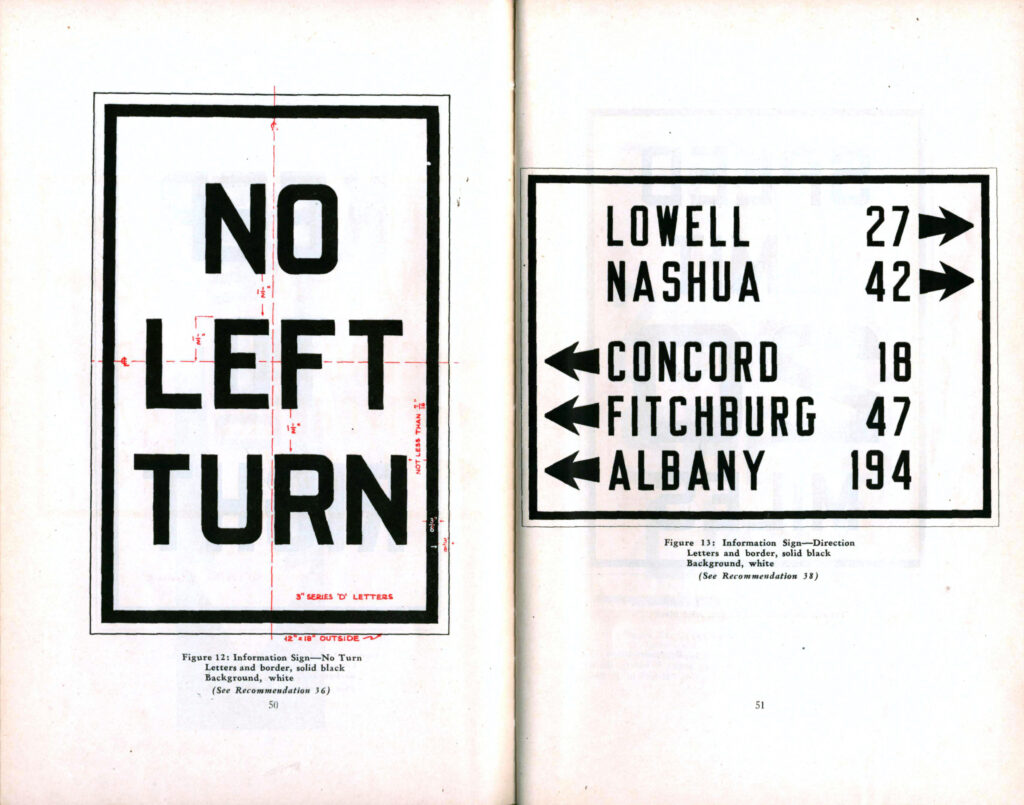
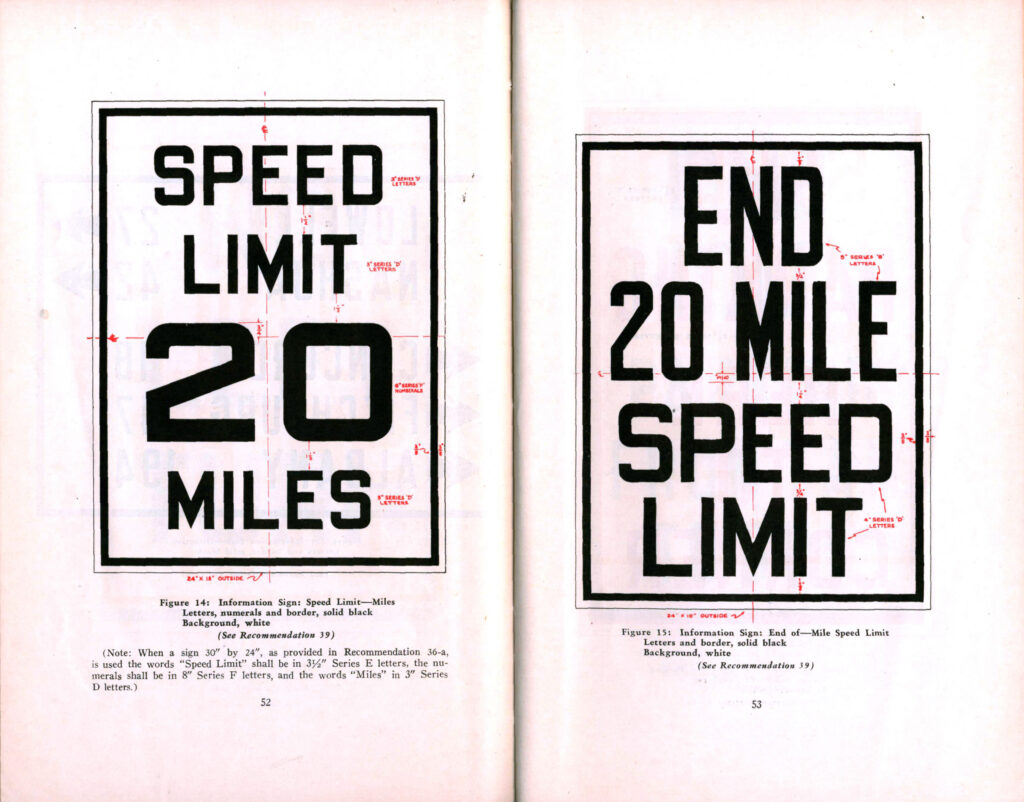
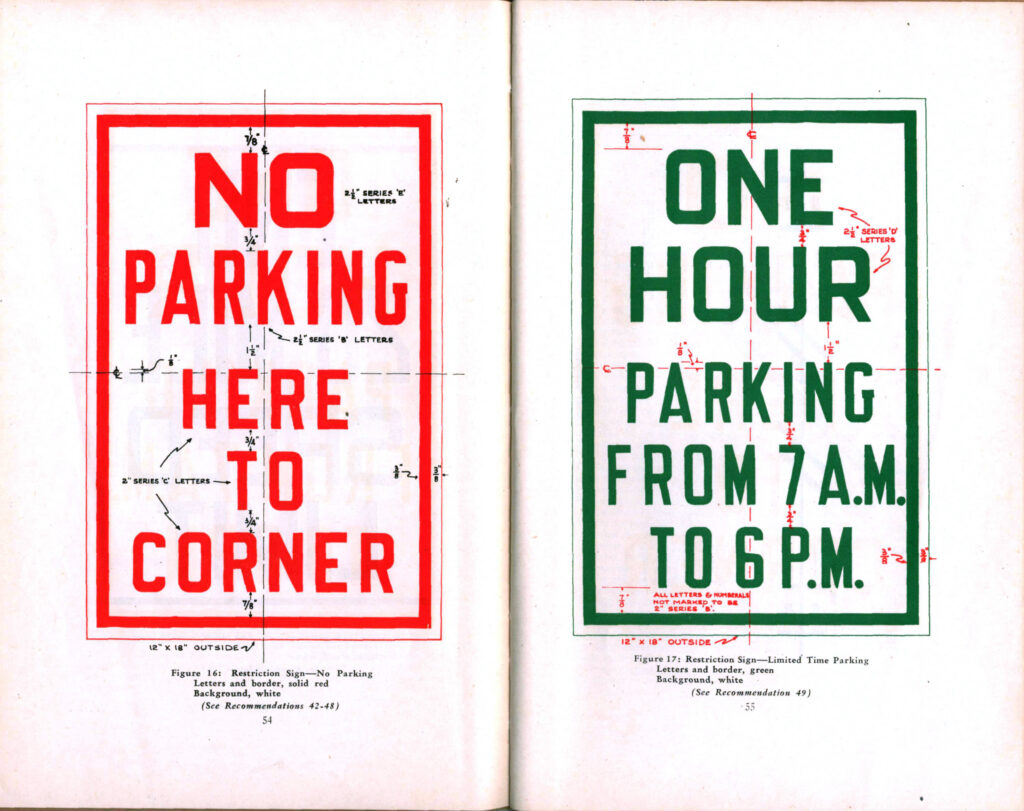
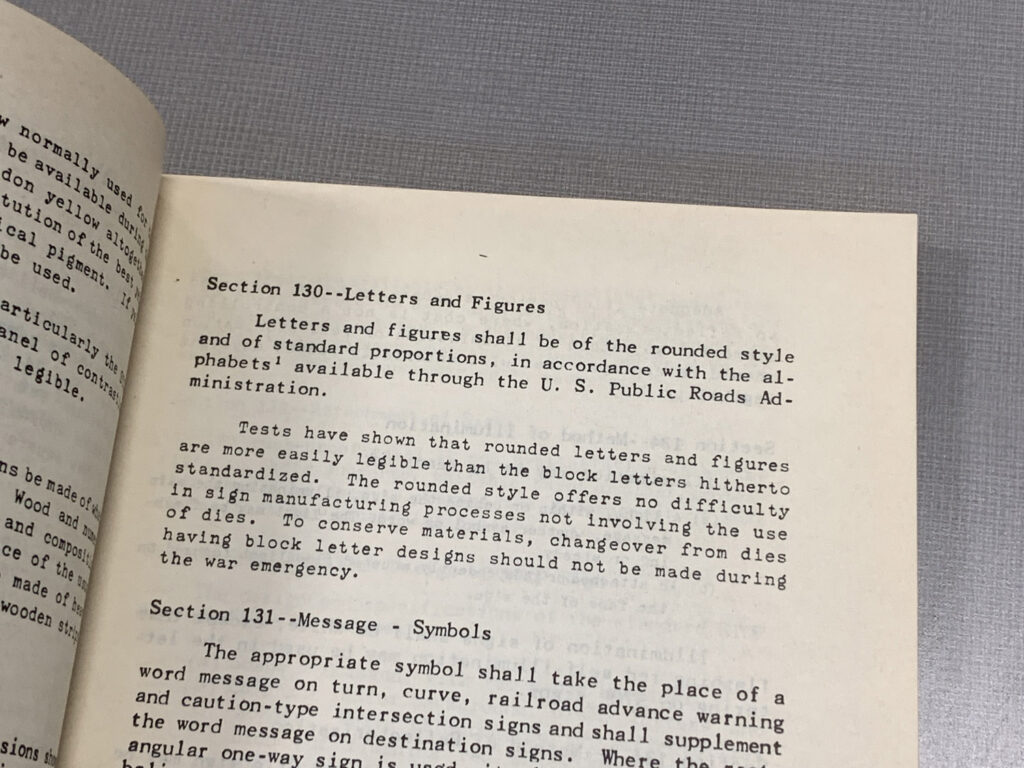
The 1935 MUTCD brought together the previous two standards, and was the first unified traffic control system in the history of the U.S. In addition to the many improvements, innovations, and clarifications, a new development in lettering emerged. The 1935 manual outlined a rounded alphabet to be used alongside the old block letters. The rounded letters were the precursor of the Standard Alphabets that would eventually become the U.S. standard.
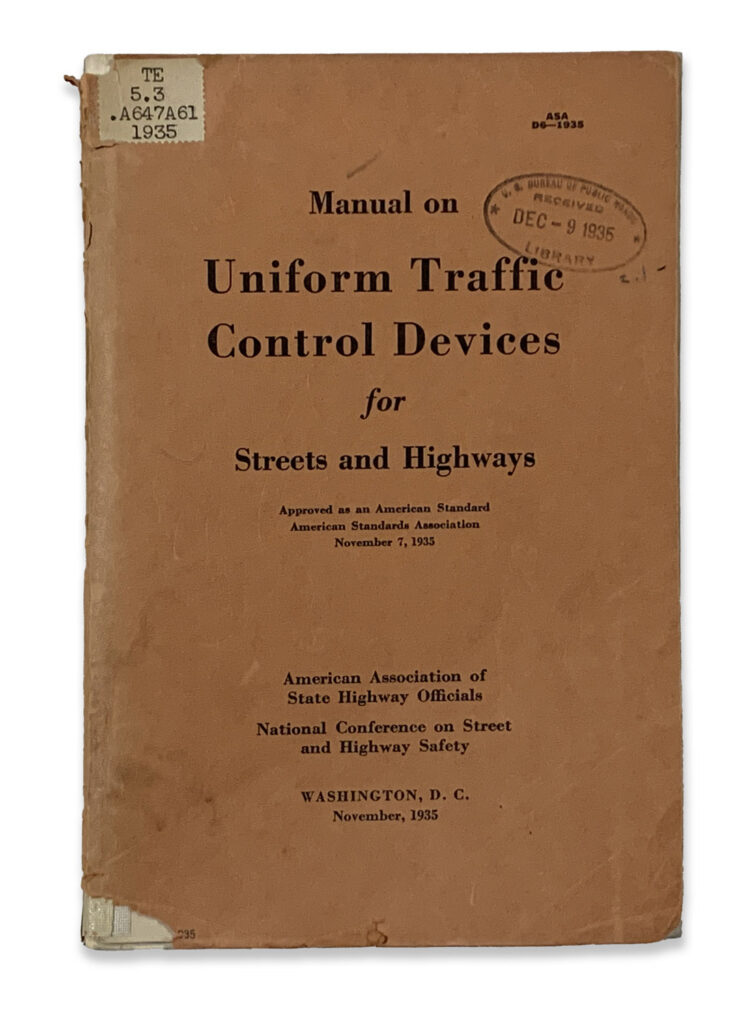
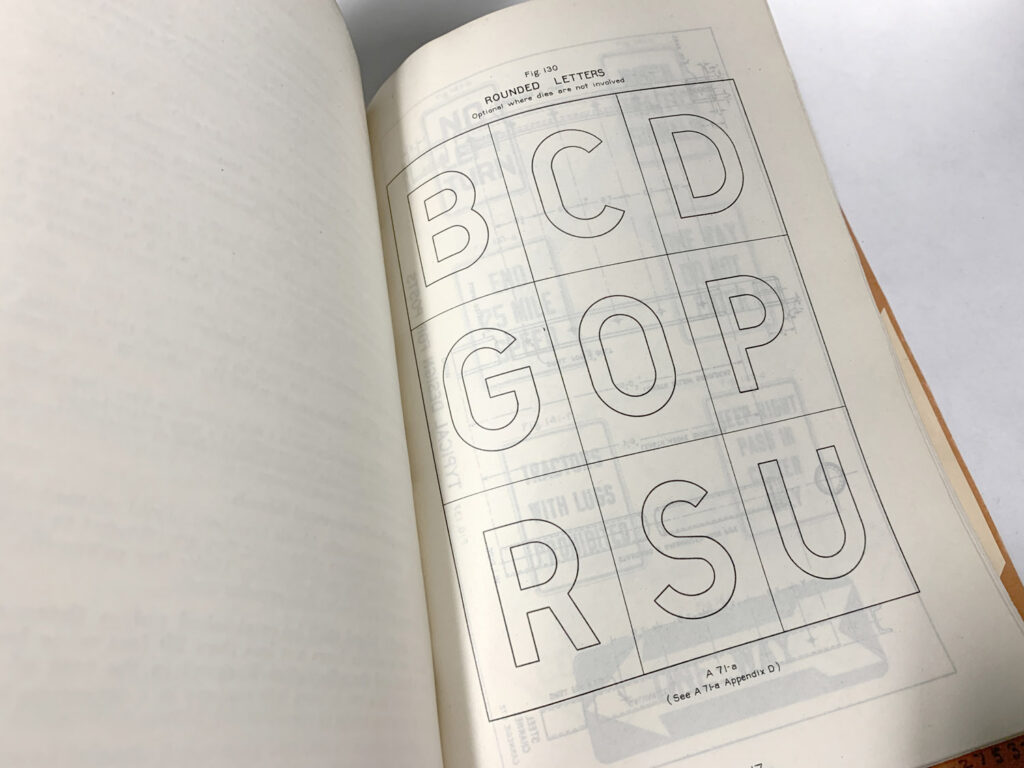
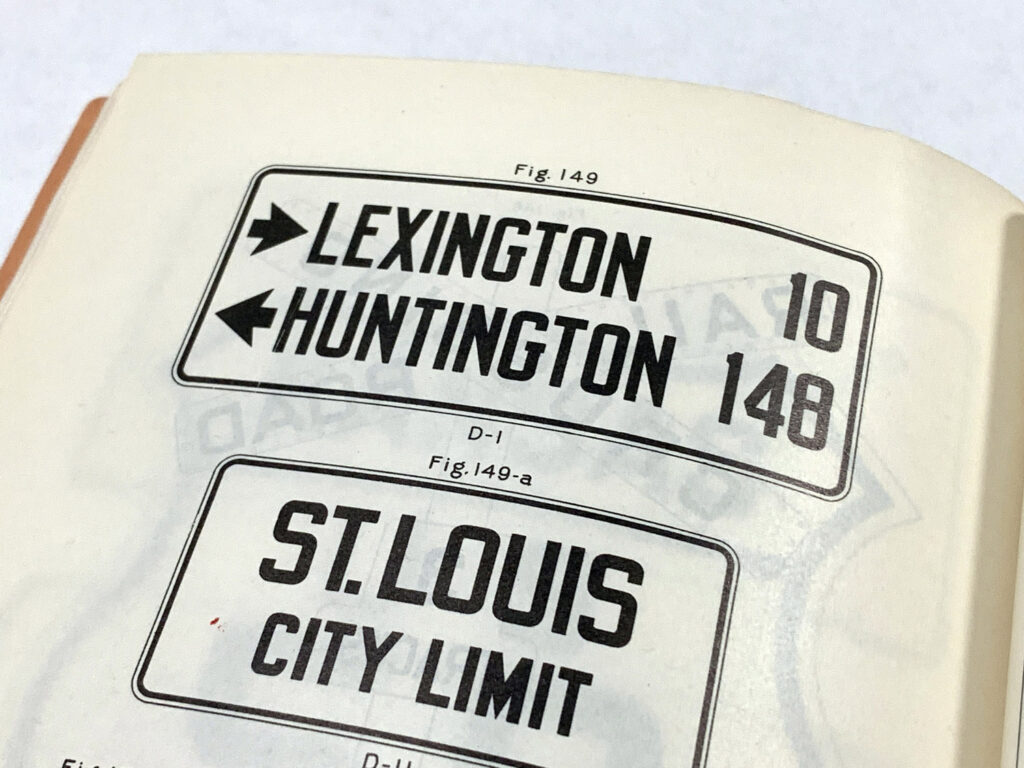
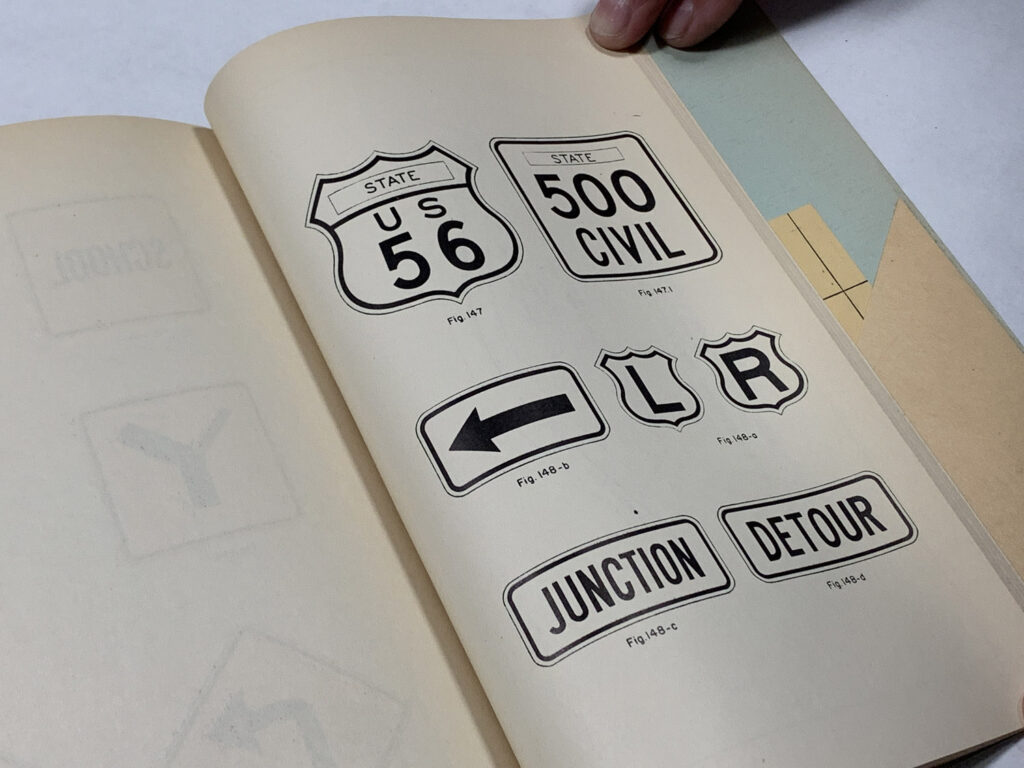
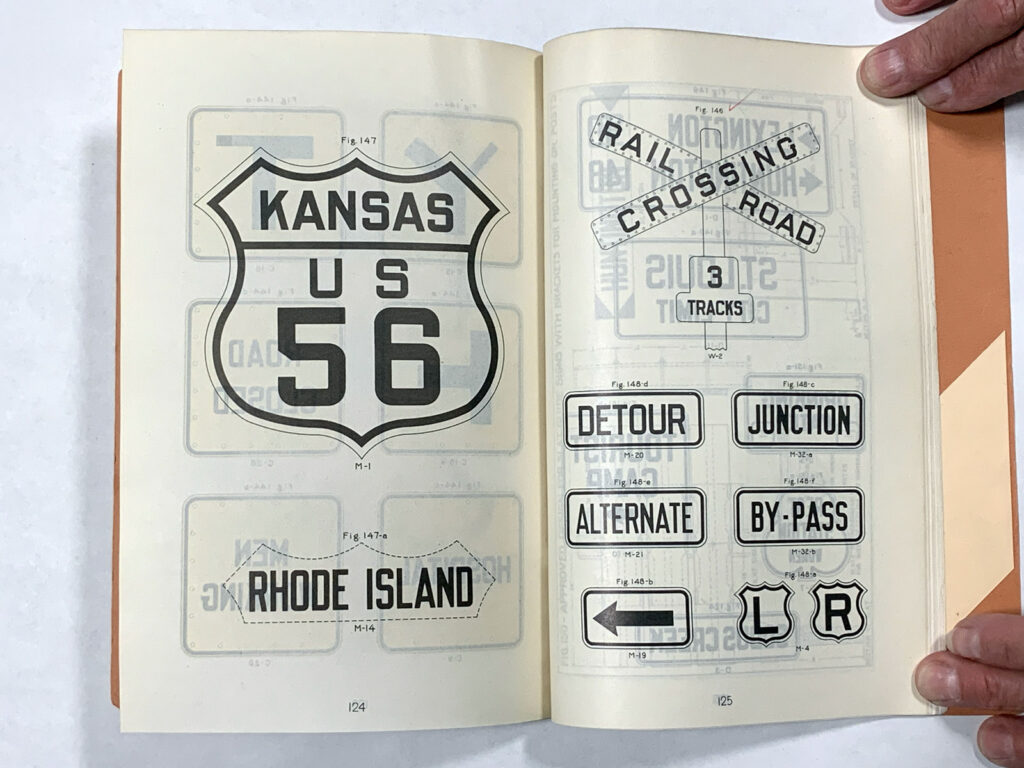
The first guidelines for the optional rounded sign letters (above) were published in the 1935 MUTCD. The forms of these letters became the basis of the later Standard Alphabets for Highway Signs, published in 1952.
The MUTCD, first published in 1935, has always been one of the bibles of the profession and continues in that capacity today.
Dr. Gene Hawkins, Senior Principal Engineer, Kittleson & Associates
Shaping Up
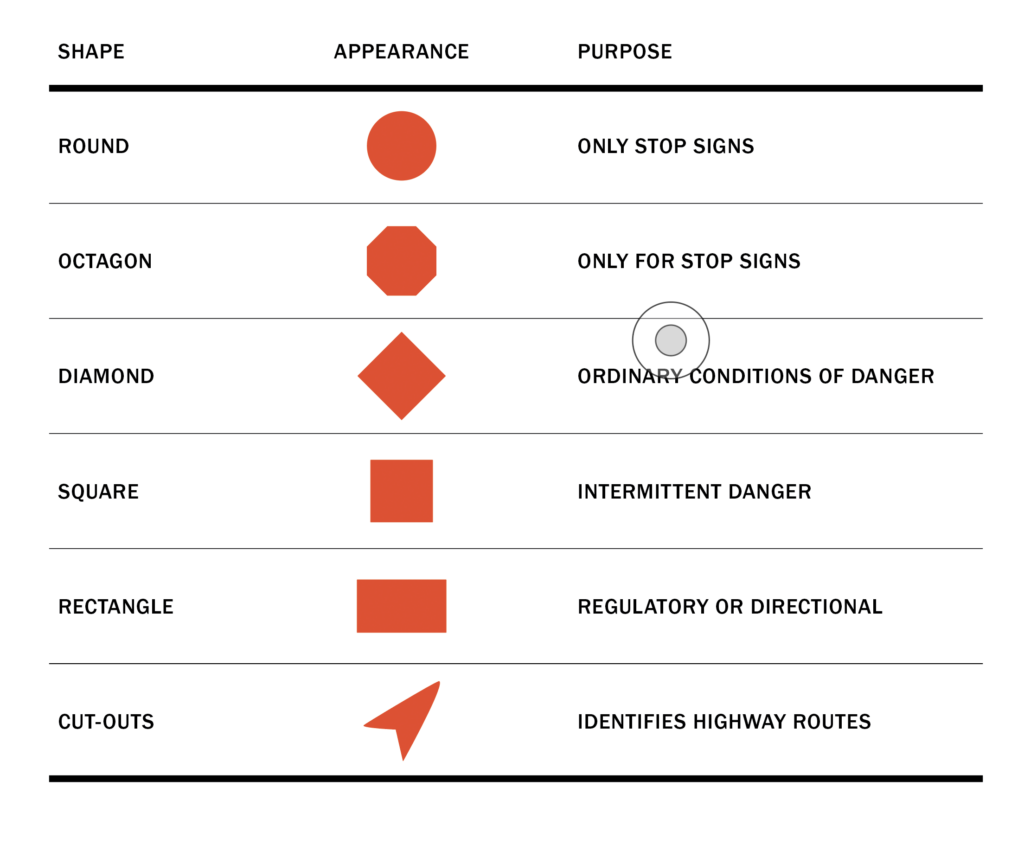
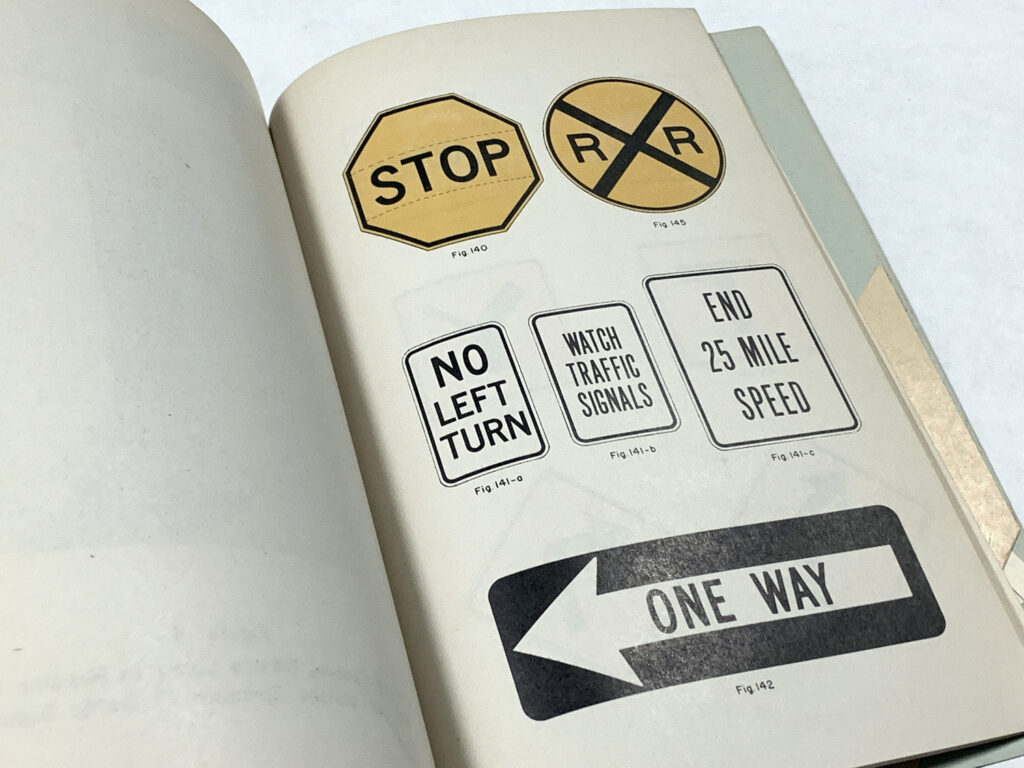
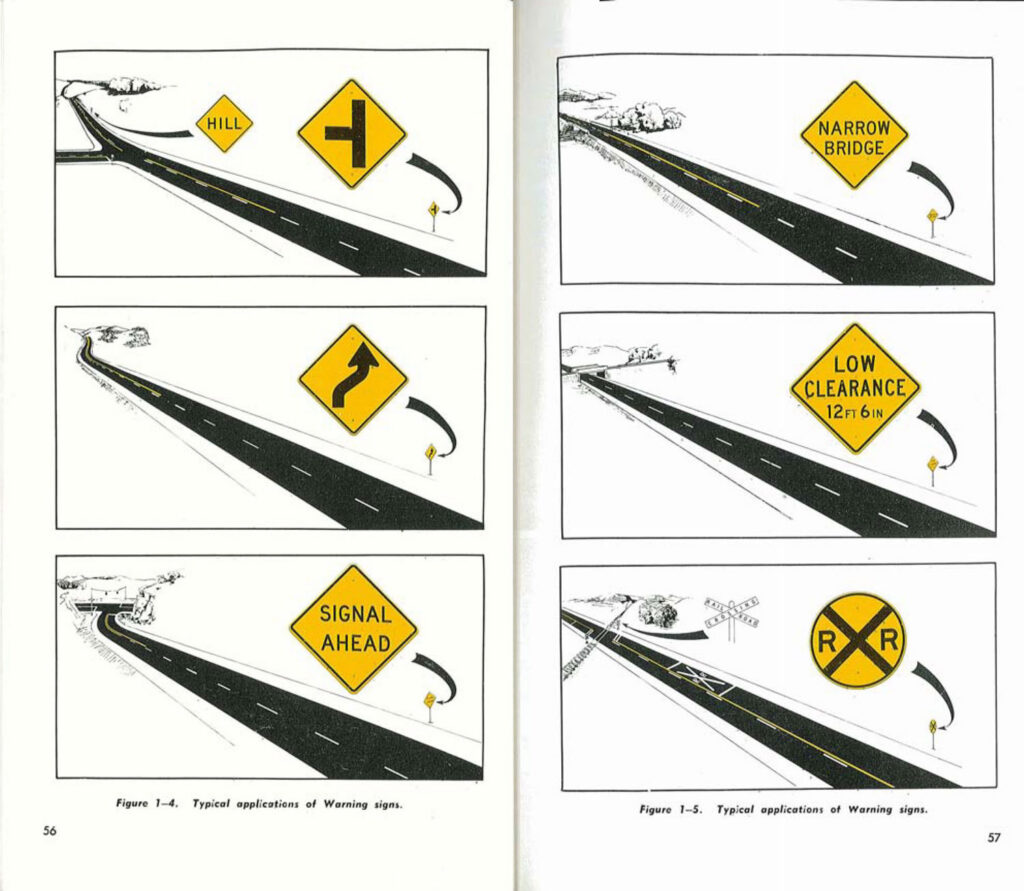
The early highway engineers realized that the shape and color of signs was information that could communicate to the driver long before the sign was actually read. Drivers would know what to expect just by the shape. The shapes of signs were codified in the 1935 MUTCD edition.
Sign Shape: The shape of the sign would carry information as to its function. The use of arrows indicating curve or direction was effective.
Yellow Signs: The standard yellow background with black letters was easier to read than black on white or white on black for daylight conditions.
Reflectivity: Studies indicated that nonreflective signs at night were hard to read, and reflective or lighted signs were preferred.
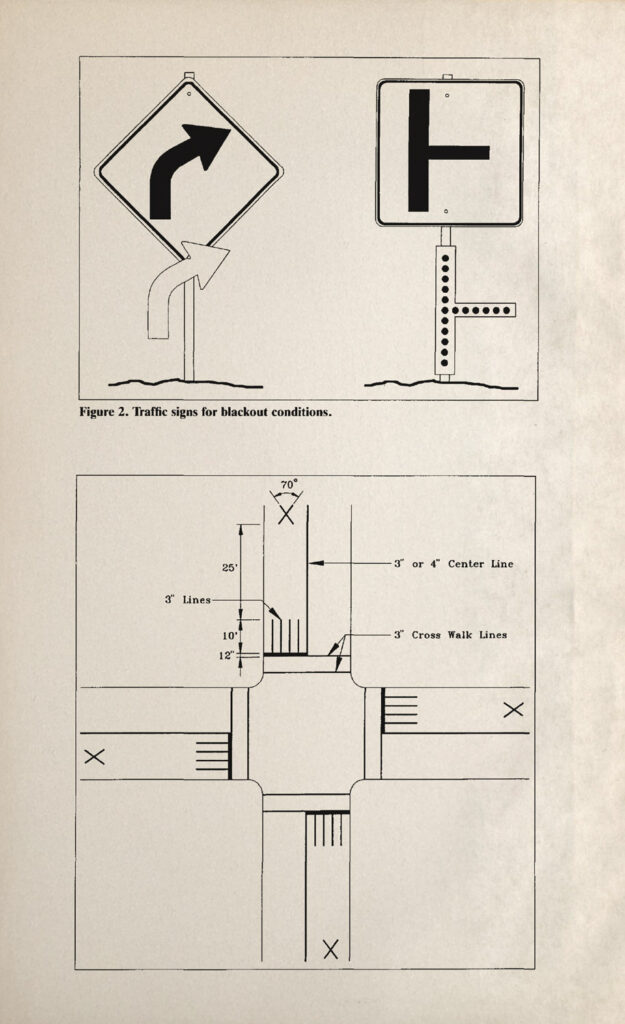
Reflective Buttons: It was determined that a 3/4 inch diameter reflector button with quarter inch spacing worked the best and did not affect readability during the day.
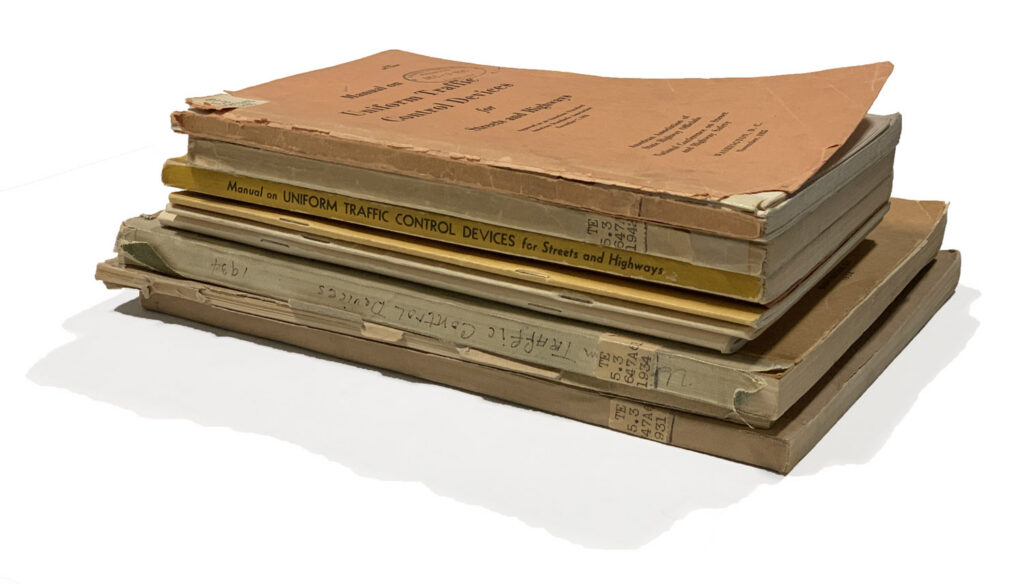
The publications on this panel were photographed at the FHWA Turner Fairbank Highway Research Center in McLean, Virginia.
1942
The 1942 MUTCD was a continuation of the 1935 standards. The principal difference was the addition of a section that covered blackout conditions during a time of war. The United States had just entered World War II, and thoughts of national defense permeated the culture. In a blackout, only vehicles equipped with low wattage headlamps may be on the roads. This requires lower reflective signage, as normal signs are too high to reflect light.
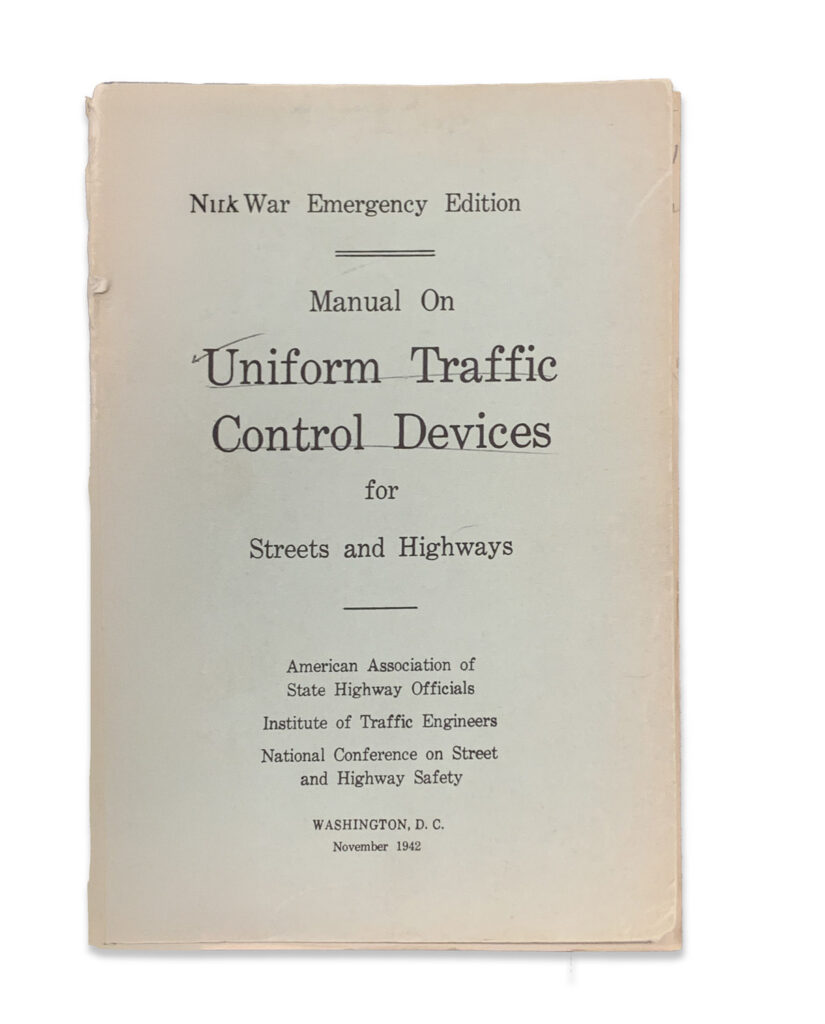
1948
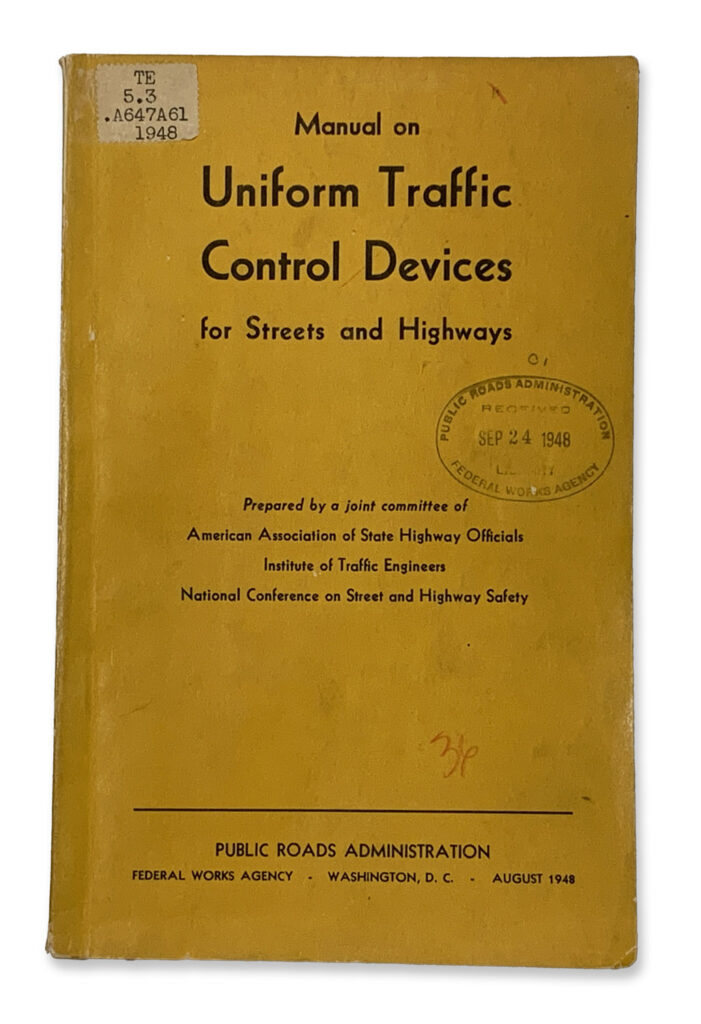
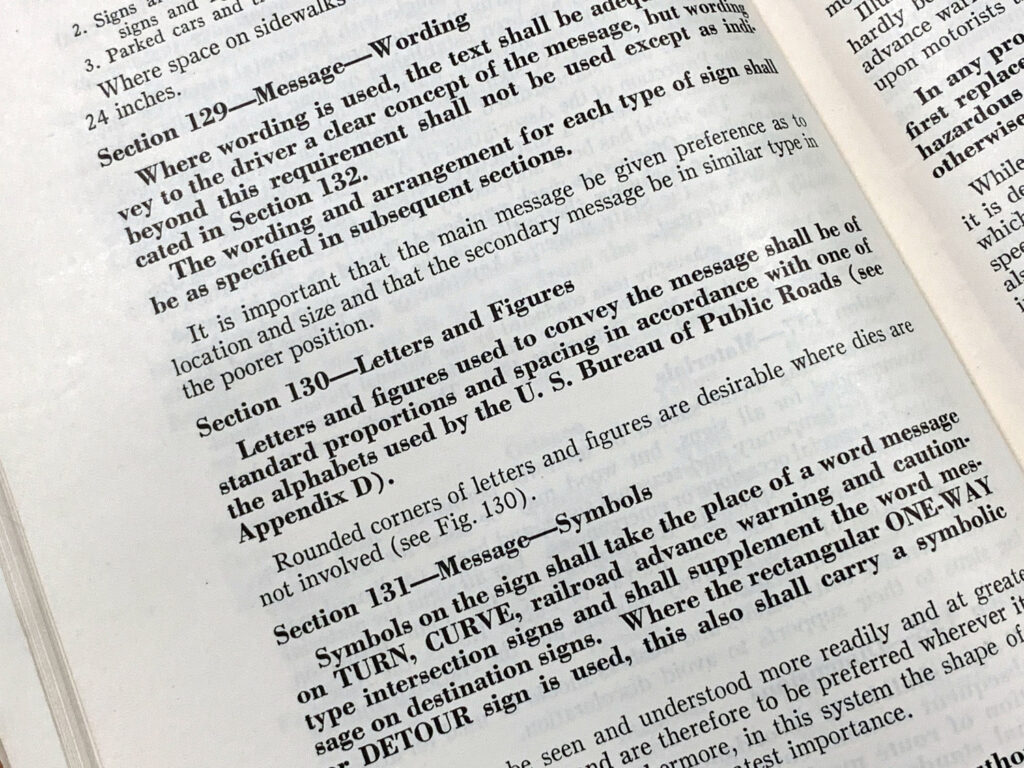
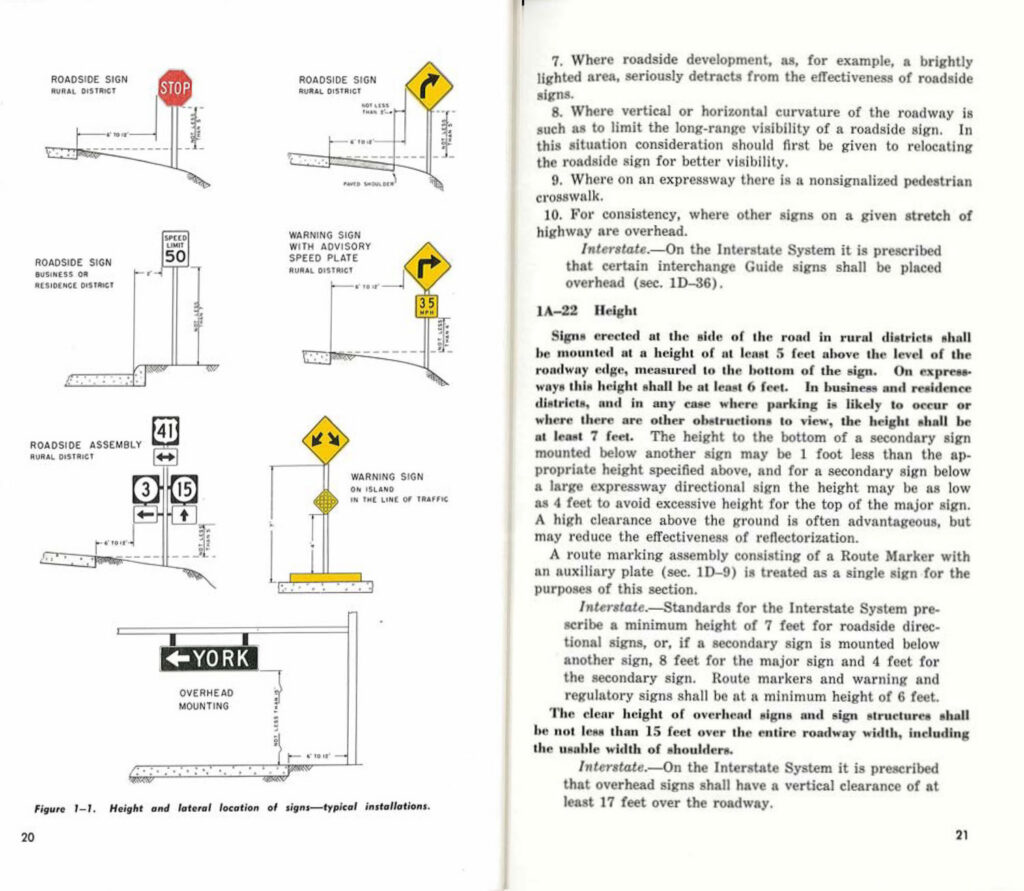
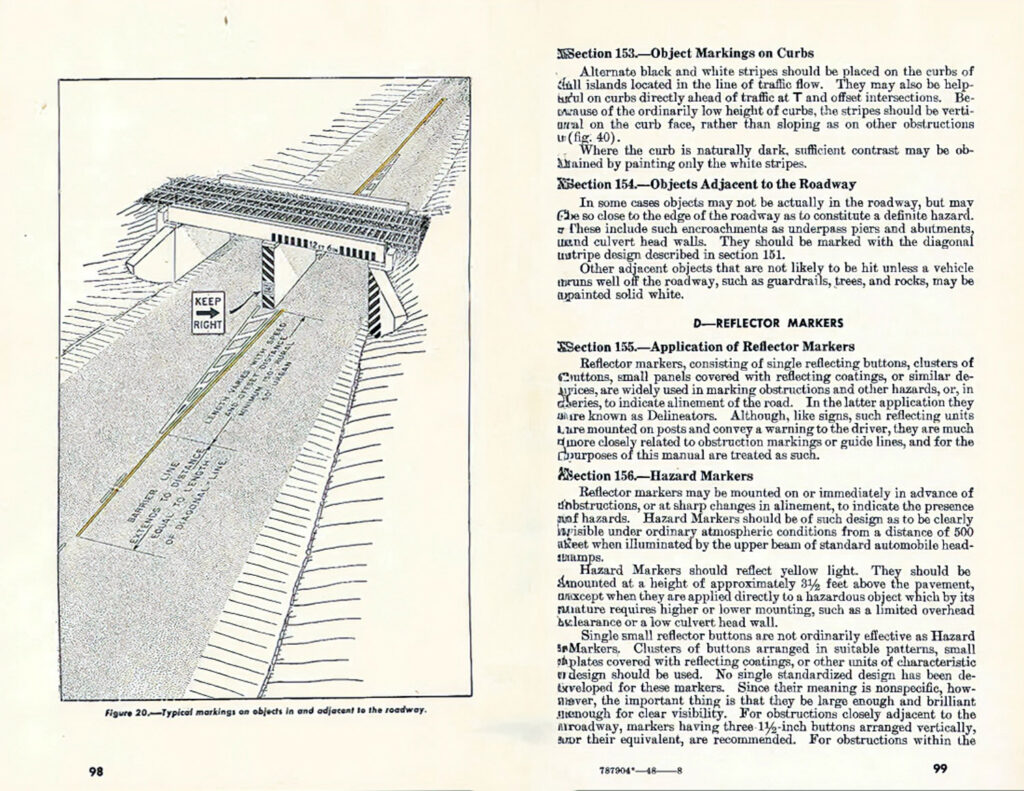
The 1948 MUTCD is the first major post-World War II overhaul of American traffic standards. The changes address the Freeway Era, moving away from the simpler, lower-speed requirements of the 1930s. This manual officially adopts the rounded letter forms as the national standard based on the success of the 1943 Pentagon road network. There are numerous changes in sign aesthetics, road markings, traffic signals, and more.
1962 Total Unification
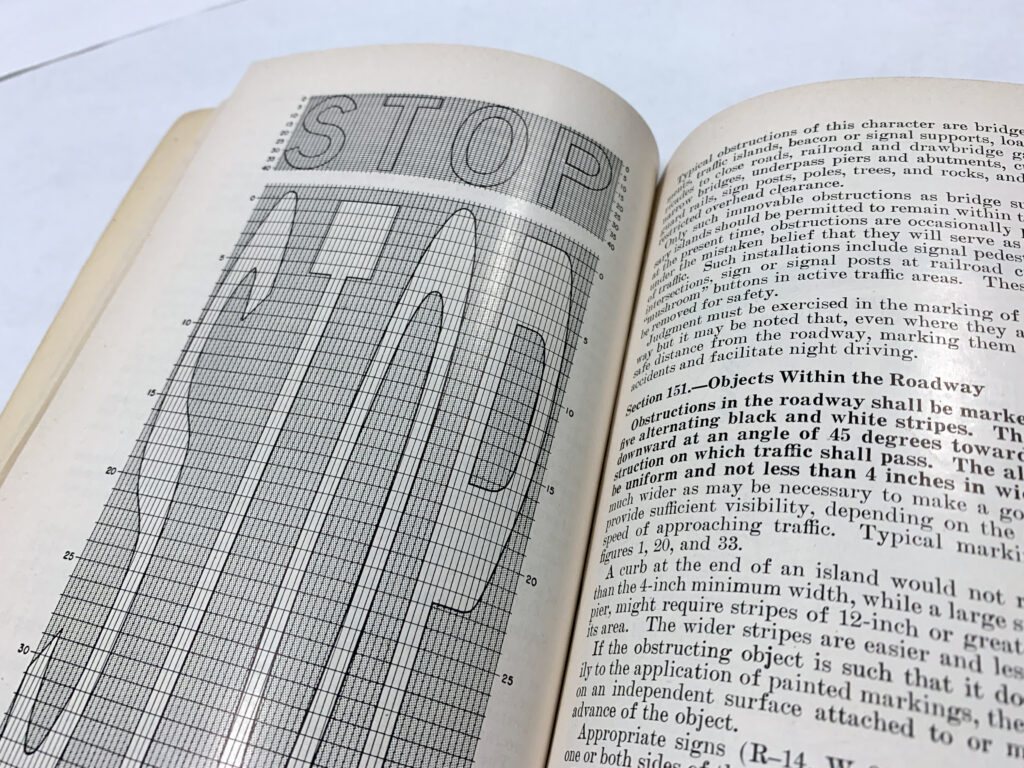
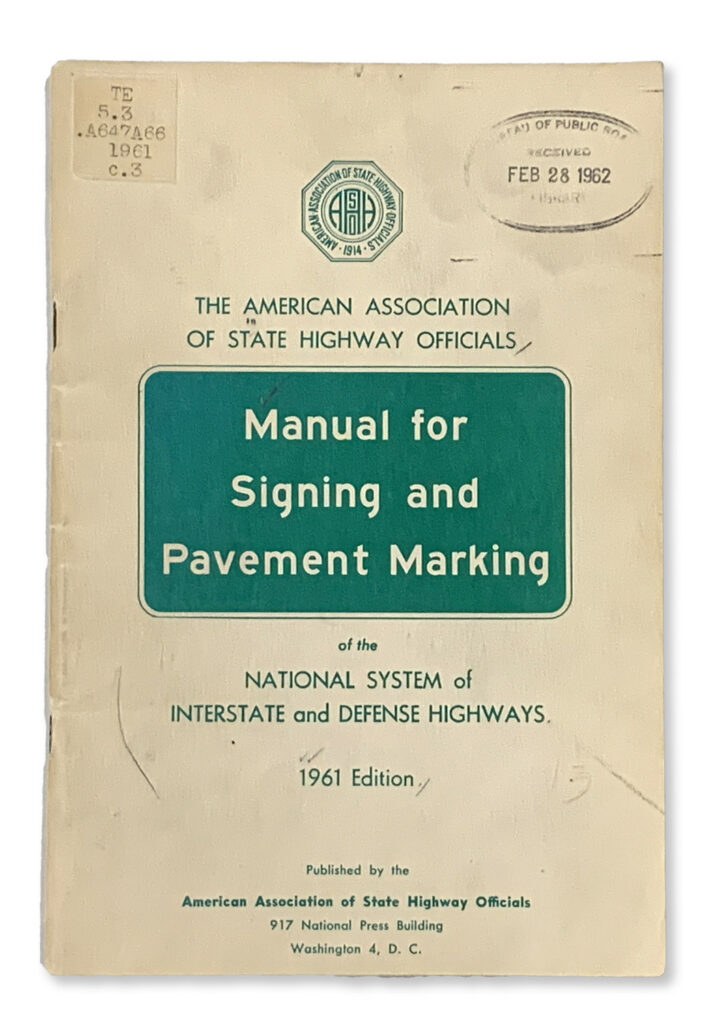
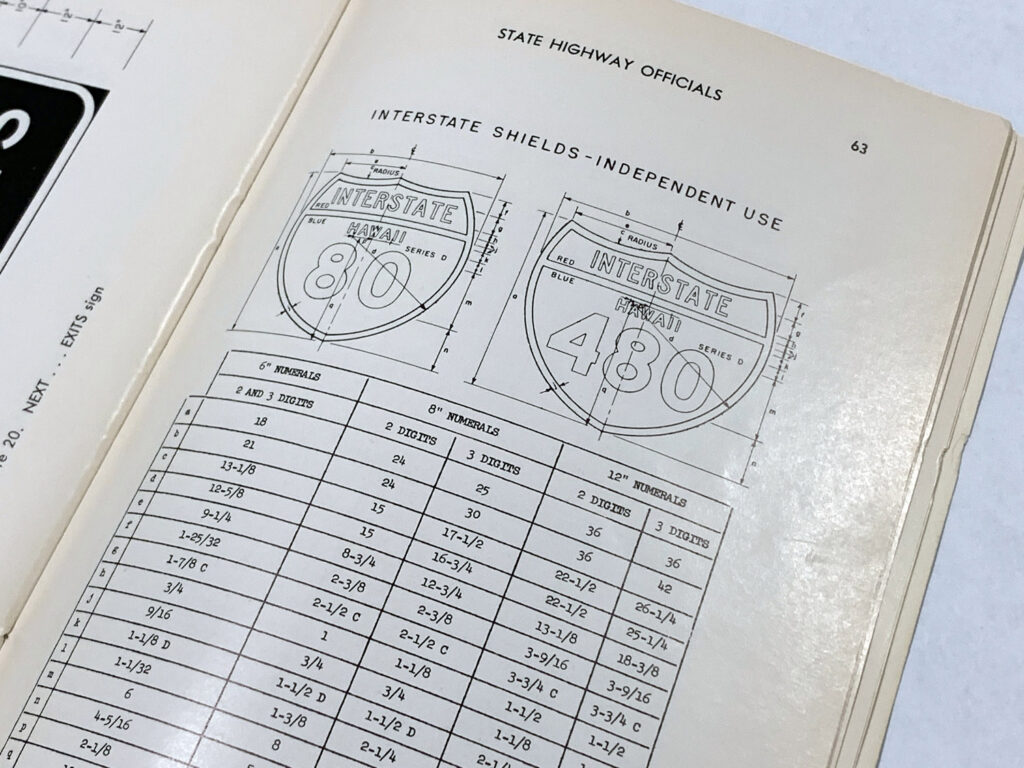
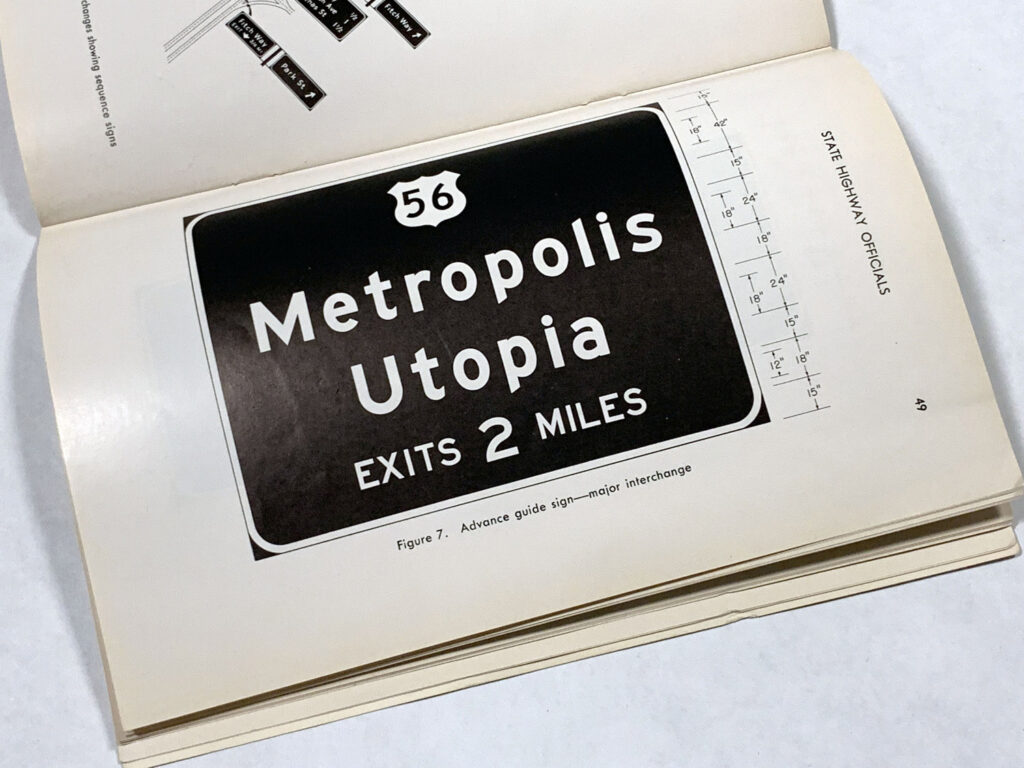
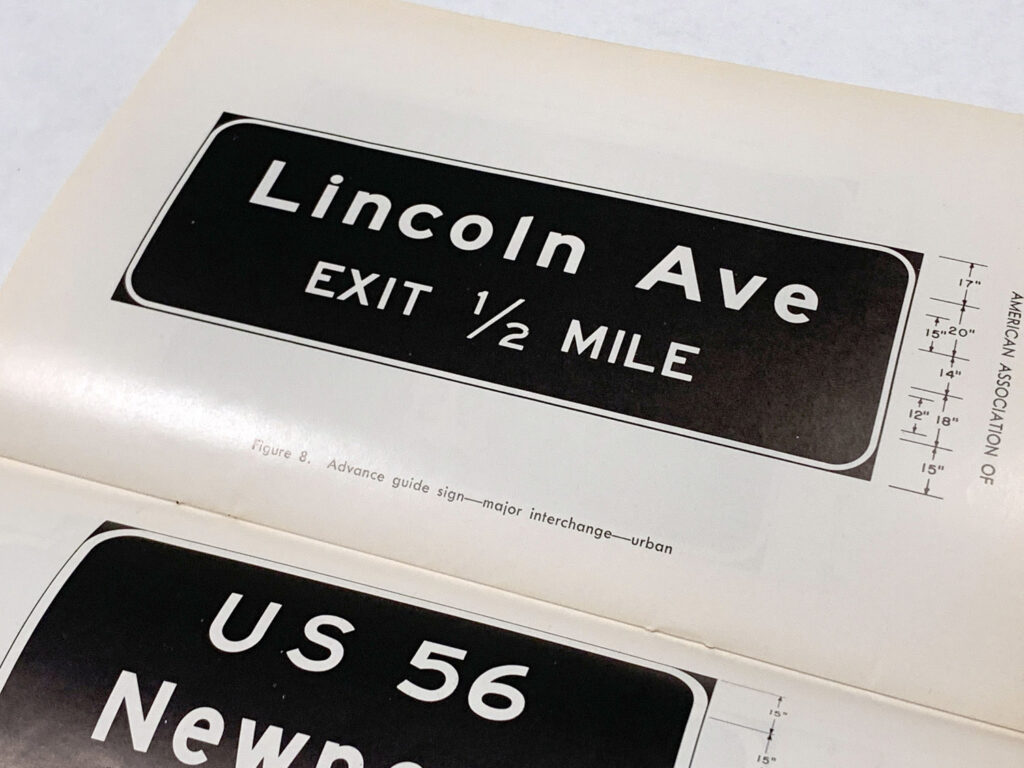
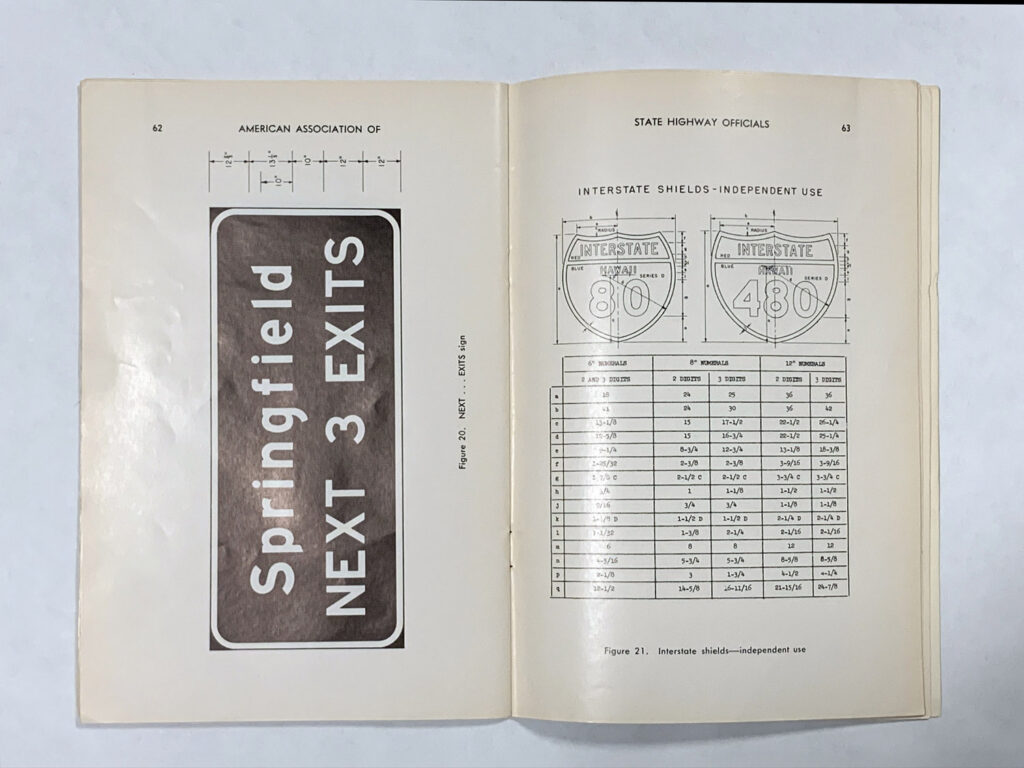
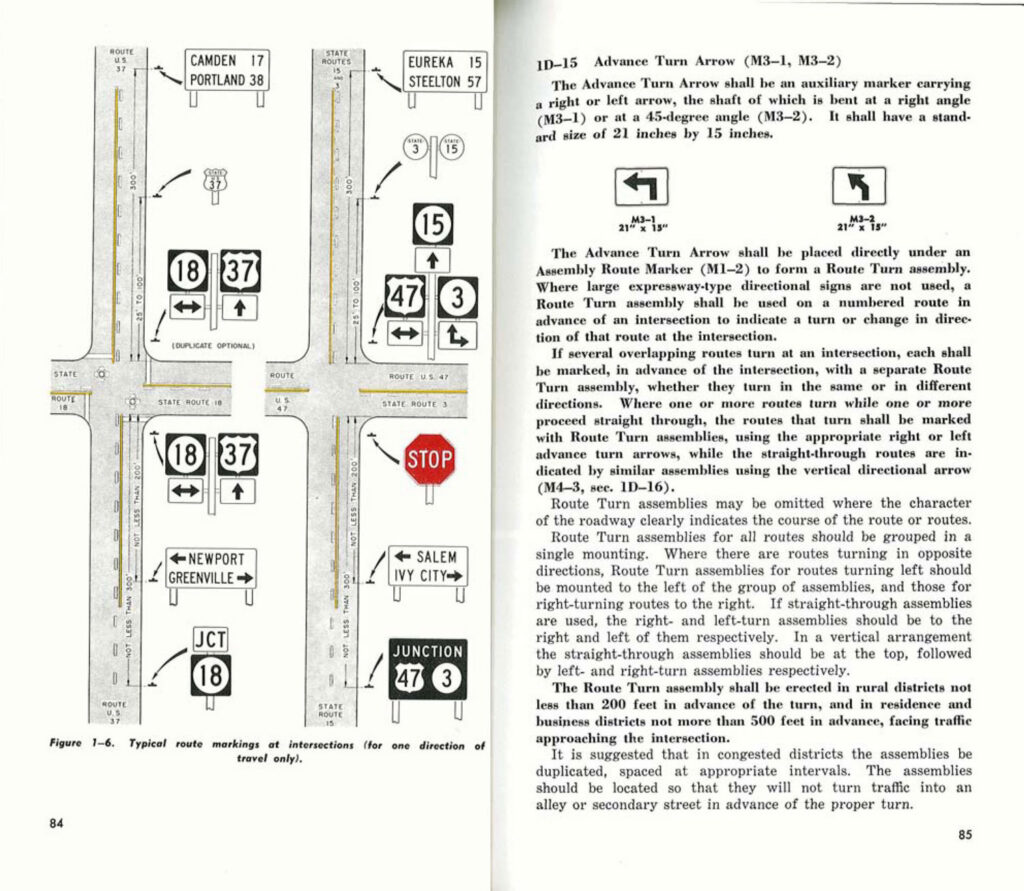
The 1961 MUTCD achieved the goal of total unification, merging the standards for rural roads, city streets, and the new Interstate highways into a single volume that consolidated every standard nationwide. A Stop sign or a Curve sign now looked exactly the same whether it stood in New York City or on a country road in Alabama. Thanks to the experiments in Greenbelt, Maryland, in 1958, the color green was standardized for all interstate navigation signs across the country, and based on T.W. Forbes’ 1951 legibility research, lowercase Standard Alphabet lettering became the new standard for these signs. In addition, any sign intended for nighttime use now had to be either reflectorized or illuminated.
1971 to 2023 and beyond
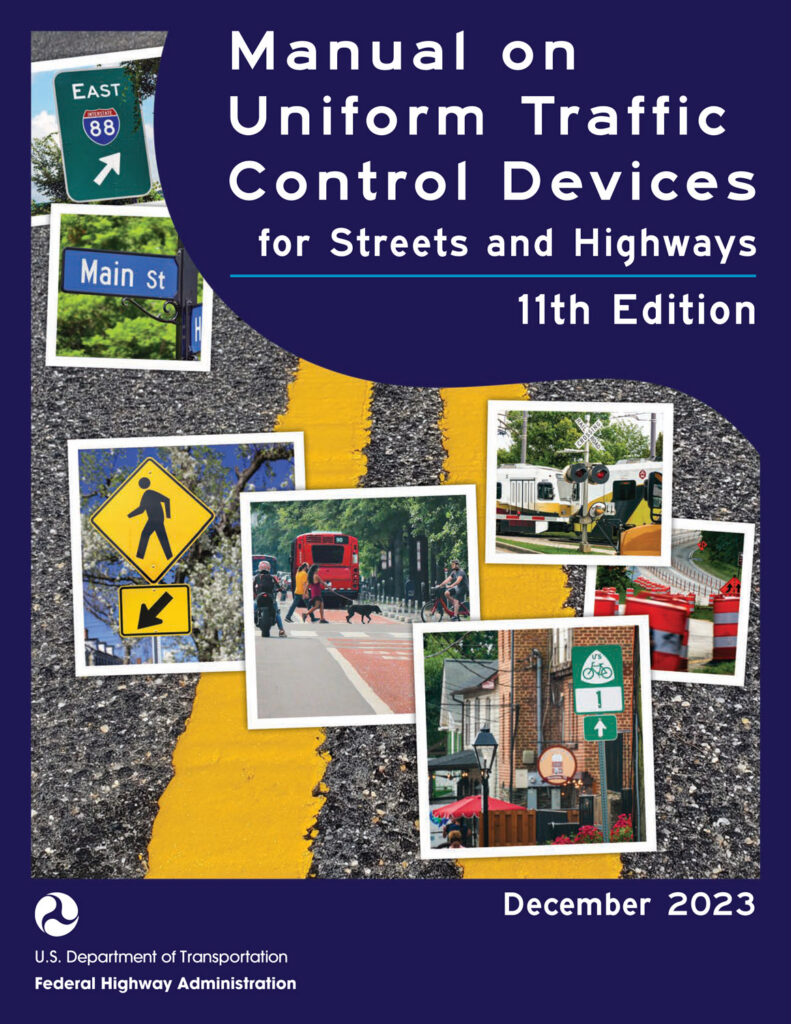
From those first efforts in 1935 to the comprehensive document it is today, the MUTCD has grown into the national standard governing all traffic control devices. By setting minimum standards and offering guidance, it ensures that a sign, signal, or marking means the same thing whether a driver encounters it in a busy city or on a remote rural road—uniformity that reduces crashes and congestion, improves the efficiency of the transportation system, and lowers the cost of these devices through standardization. Every provision in the manual reflects years of practical experience, research, and formal experimentation, all aimed at keeping traffic control devices visible, recognizable, understandable, and necessary. Yet the MUTCD has never been a static rulebook. Through an open, ongoing rulemaking process, it continues to absorb new devices and applications, balancing innovation and flexibility against the uniformity that makes it work. Its success ultimately rests on the same foundation it always has: nationwide acceptance and the participation of the countless practitioners and stakeholders who keep it current, relevant, and responsive to the safety and operational challenges of each new era.