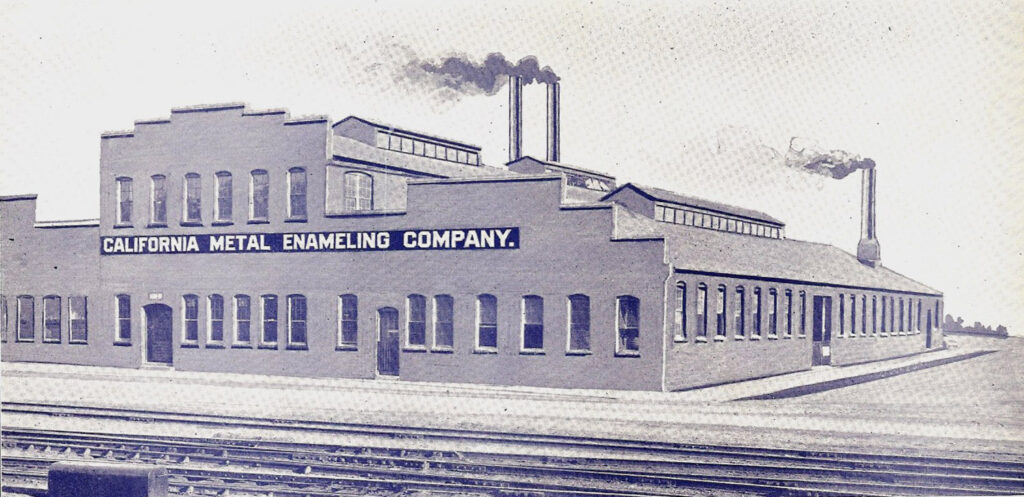
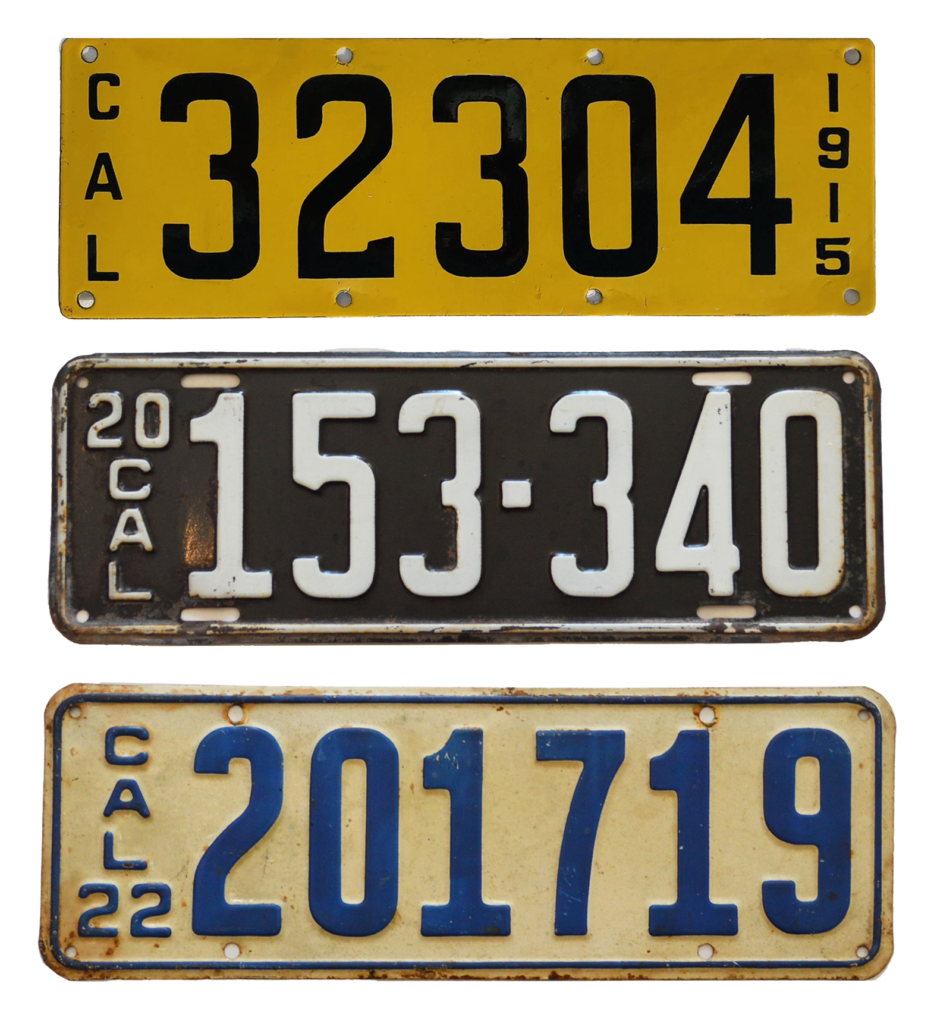
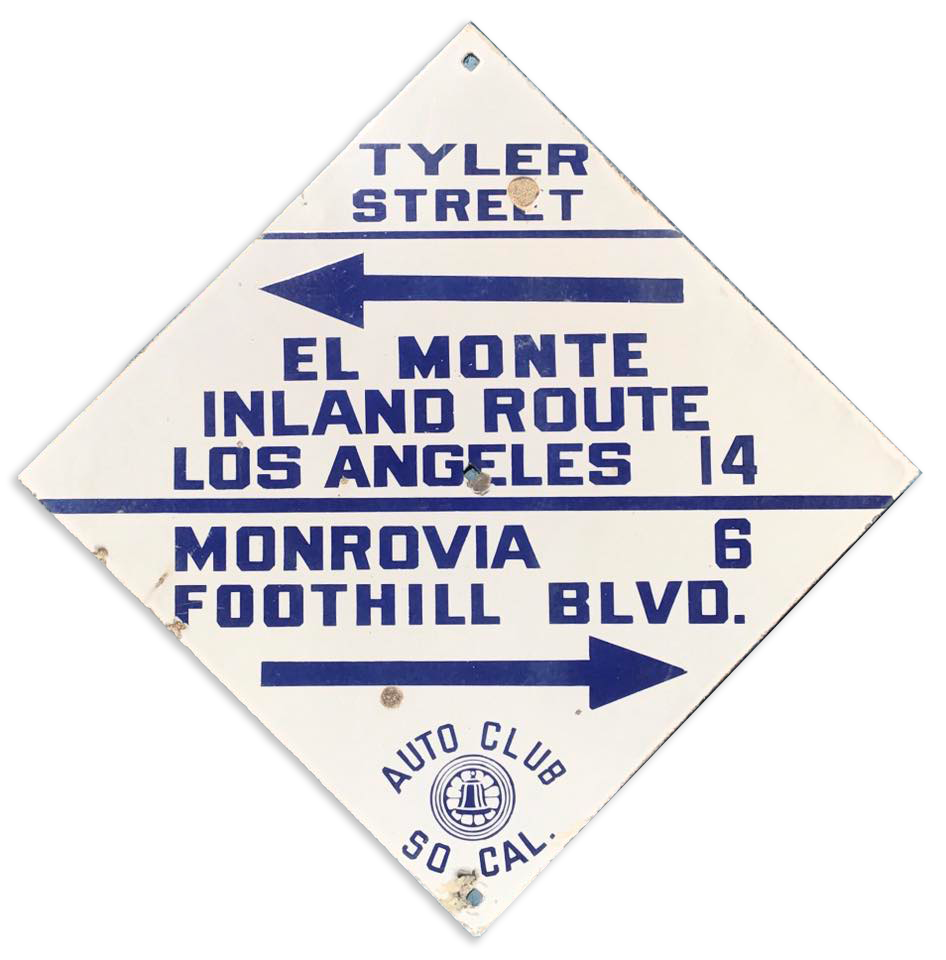
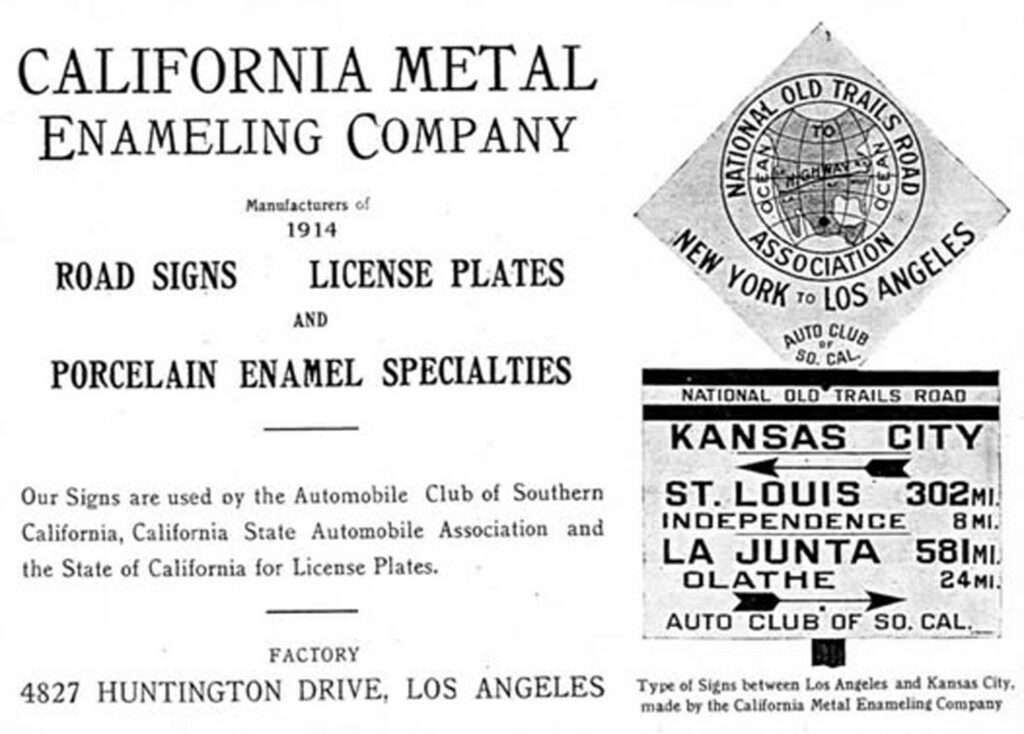
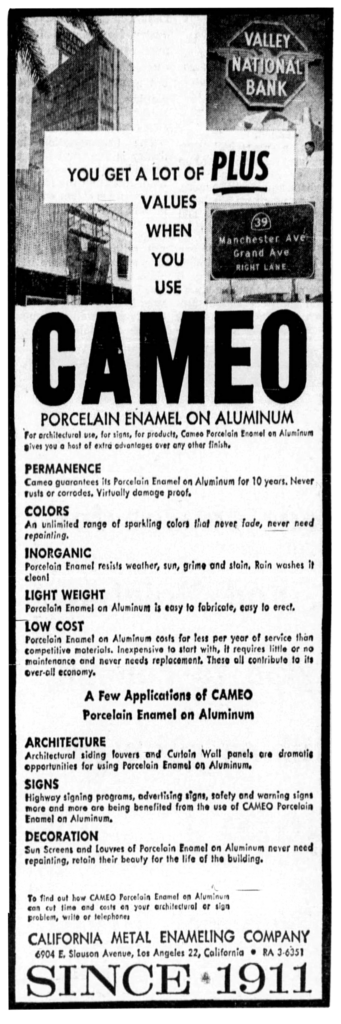
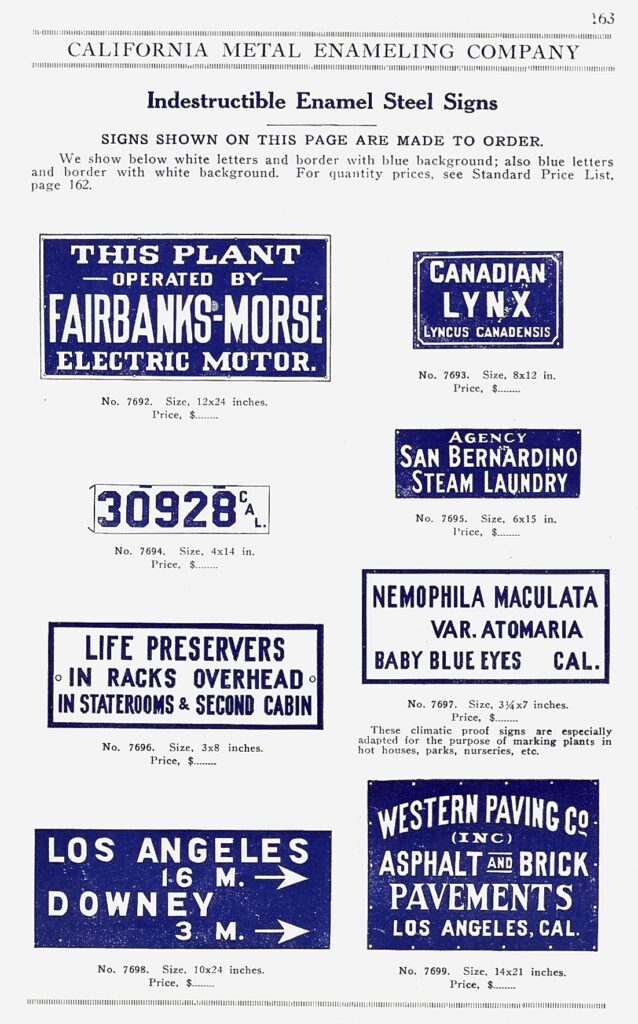
The California Metal Enameling Company (CAMEO) was essential to expansion of the American highway system. By specializing in the production of porcelain enamel signs, they provided the durability and high-contrast finish required for the first generation of high-speed freeways. Through their ability to manufacture precise, scale-ready alphabets they enabled engineers to create effective highway signs that define the modern driving experience. Though the enameled steel signs were inevitably replaced by lighter aluminum, CAMEO contributed significantly to the early road system.
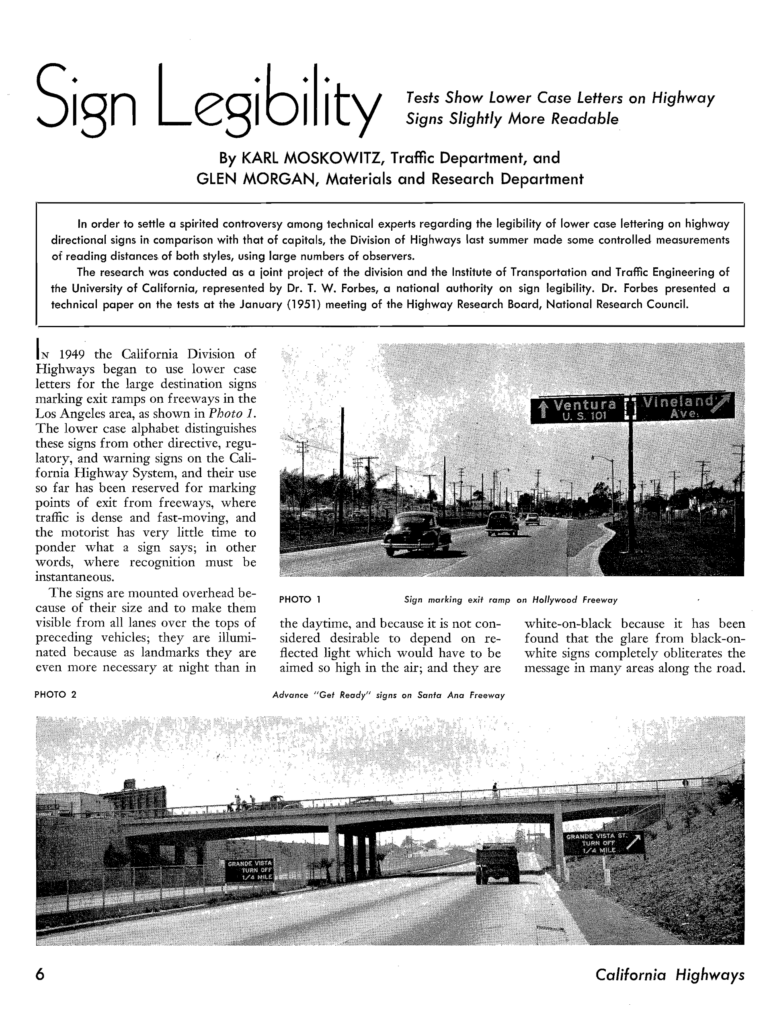
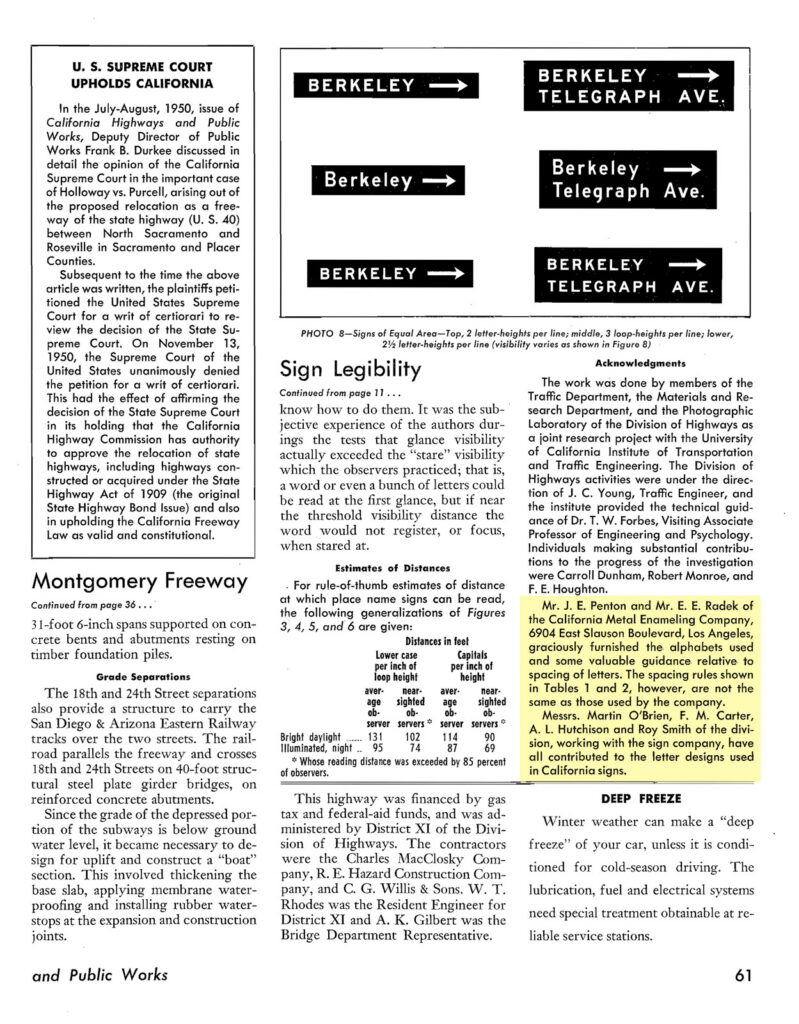
The CAMEO Role in Forbes‘ 1950 Legibility Study
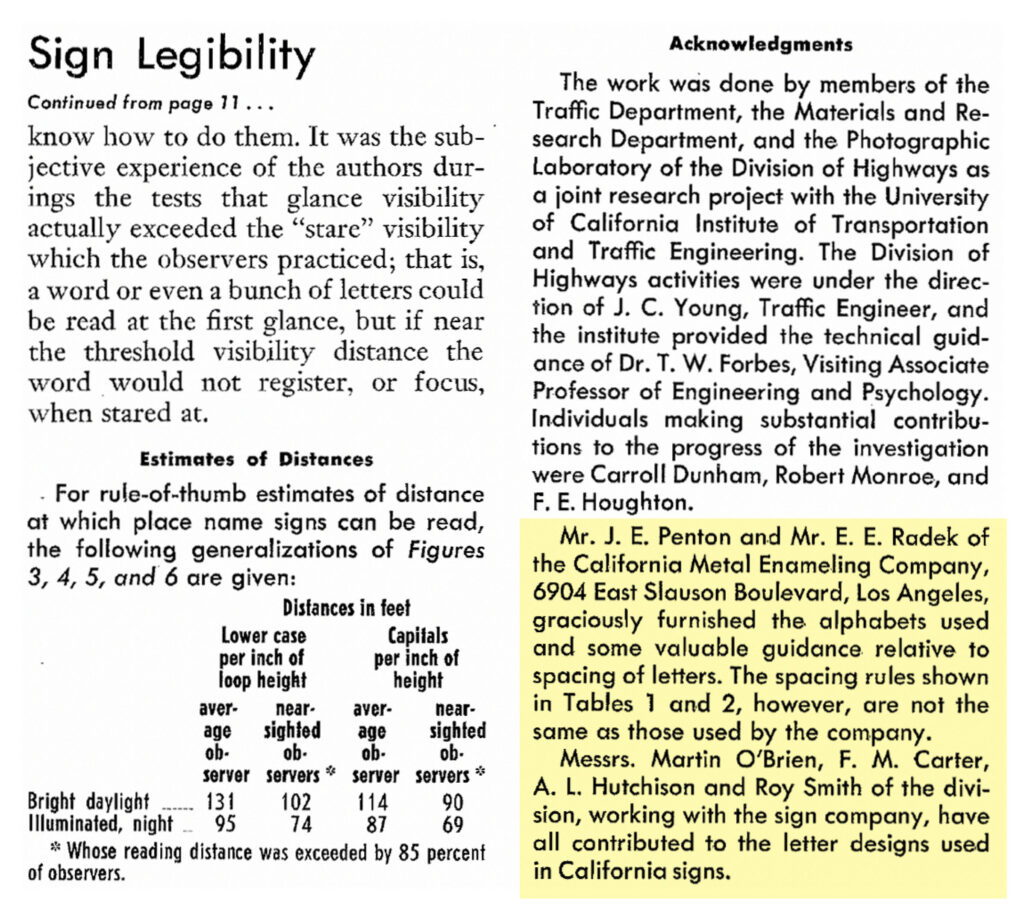
The California Metal Enameling Company of Los Angeles was a longtime supplier of signs to the state of California and was directly involved in producing the signs used in Theodore Forbes’ 1950 legibility study. And while it is clear that Forbes himself did not design the letters, the individuals credited in the study did have a hand in shaping the letterforms. J. E. Penton and E. E. Radek of the company furnished the alphabets used in the tests and offered valuable guidance on the spacing of letters—though the final spacing rules published in the study differed from the company’s own. Working alongside them, Martin O’Brien, F. M. Carter, A. L. Hutchison, and Roy Smith of the Division of Highways all contributed to the letter designs that appeared on California signs.