Back to Articles

Why Were Stop Signs Yellow?

For over two decades, stop signs were yellow because the red pigments of the early 20th century faded too quickly to remain effective. Yellow was standardized as the most durable and visible option in the late 1920s, and remained the national norm until 1954, when technological advances by the 3M Corporation finally produced fade-resistant red coatings.
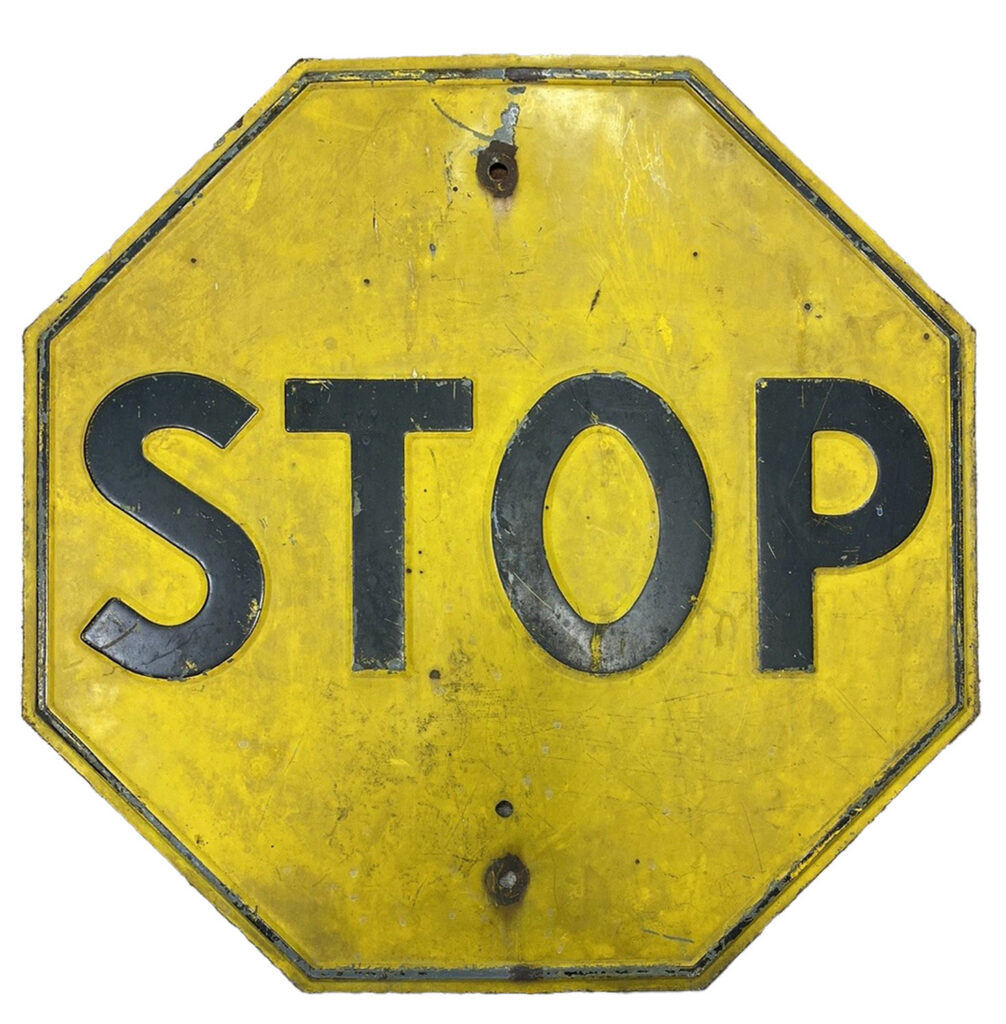

Weathered yellow octagonal stop sign.
For over two decades, stop signs were yellow because red pigments faded too quickly to remain effective.
White Detroit stop sign with black uppercase lettering.
1915: The first stop sign installed in Detroit was black upper case lettering on a white field (visualization above).
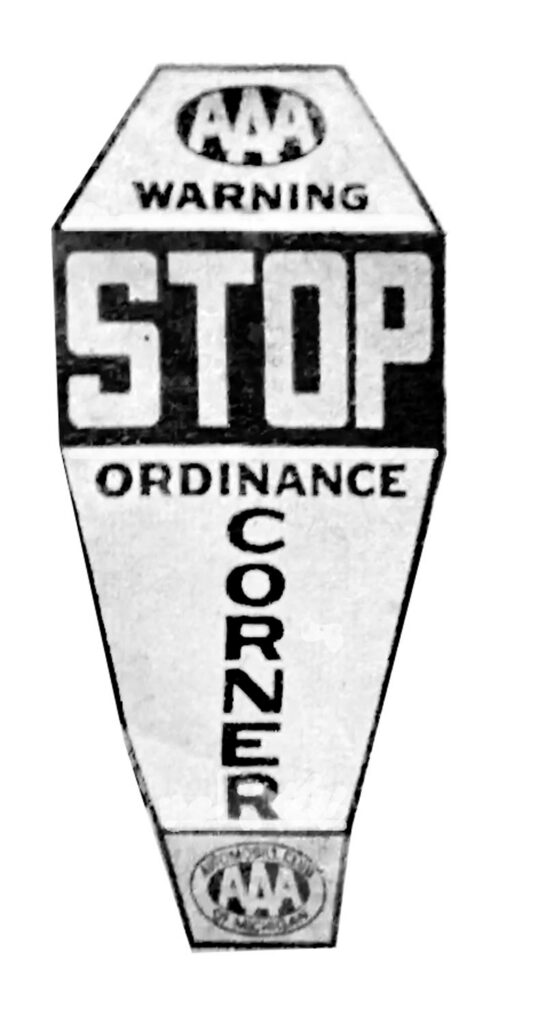
Coffin-shaped AAA warning stop sign.
Early 1920s: There were many variations on the stop sign. The coffin-shaped sign is evidence of increasing fatalities.
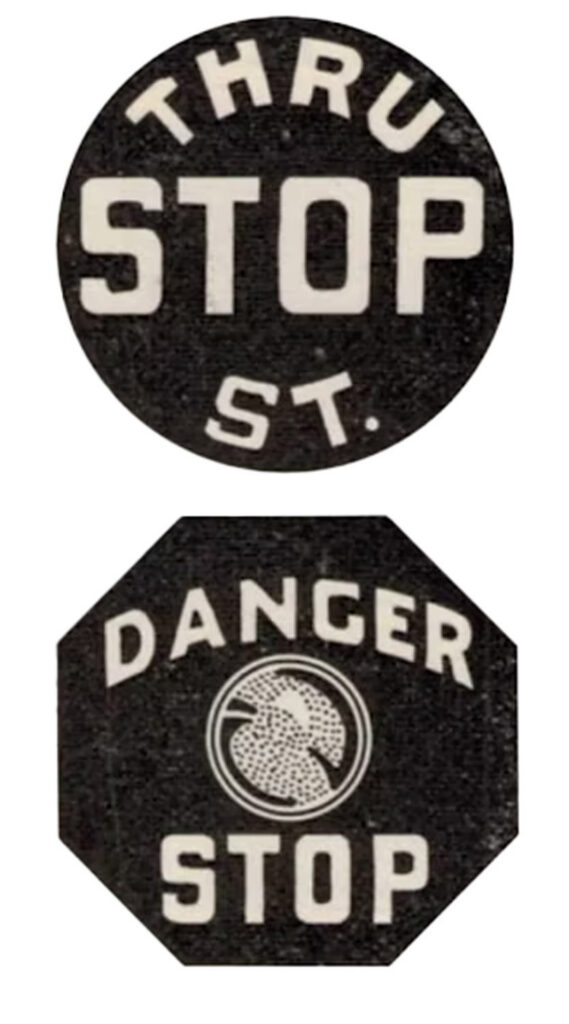
Two black early stop sign designs.
Early stop sign variations before national standardization.
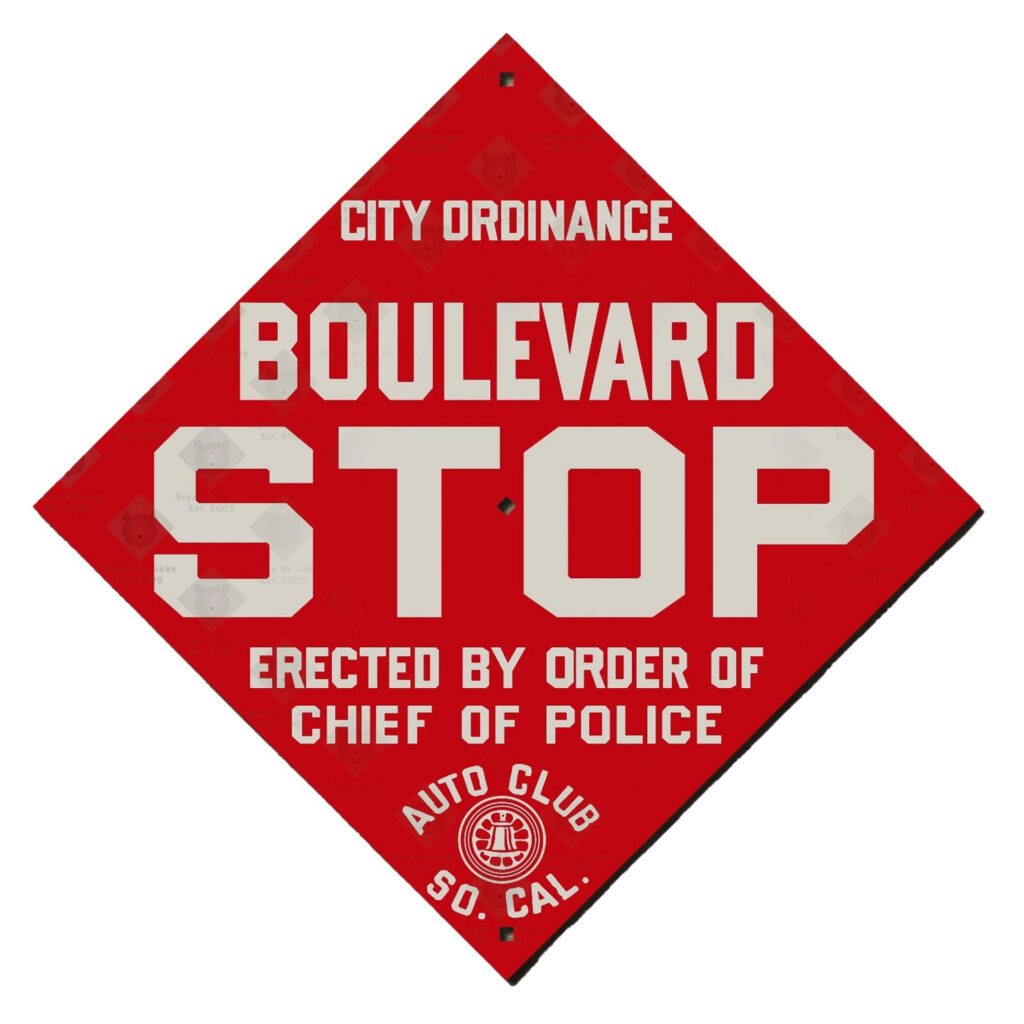
Red Boulevard Stop sign erected by order of the Chief of Police.
c. 1920: These red enamel stop signs were prevalent in California and paid for privately by the Auto Club of Southern California.
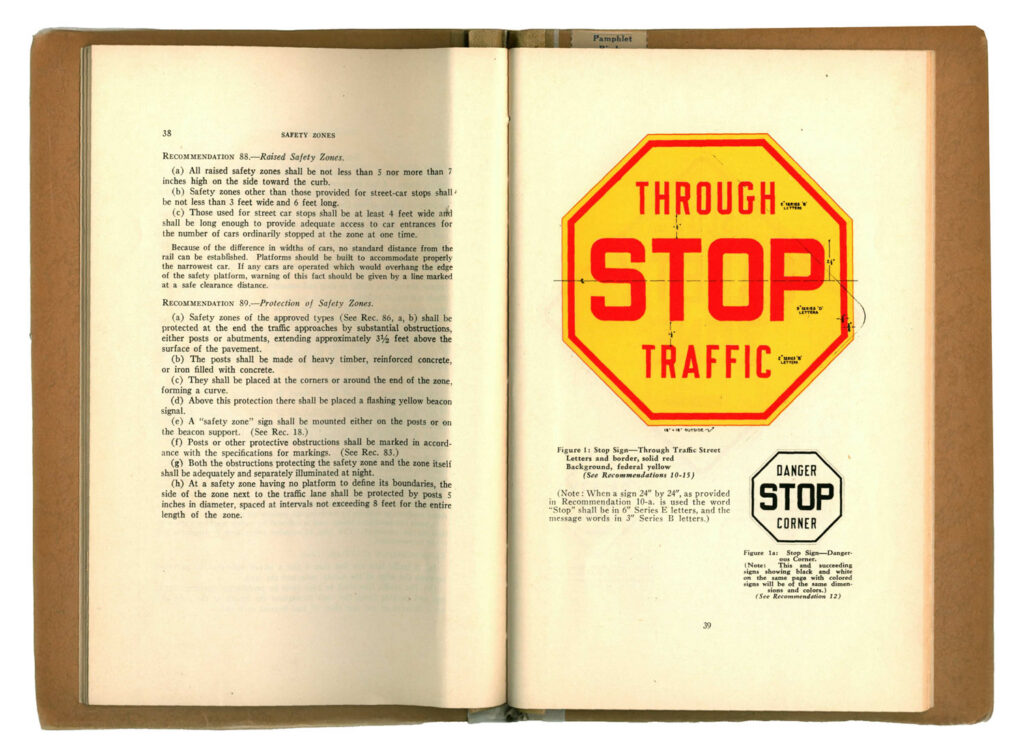
1930 manual page showing through stop traffic sign standard.
Red lettering was an optional standard as defined in the 1930 Manual on Street Traffic Signs, Signals, and Markings.
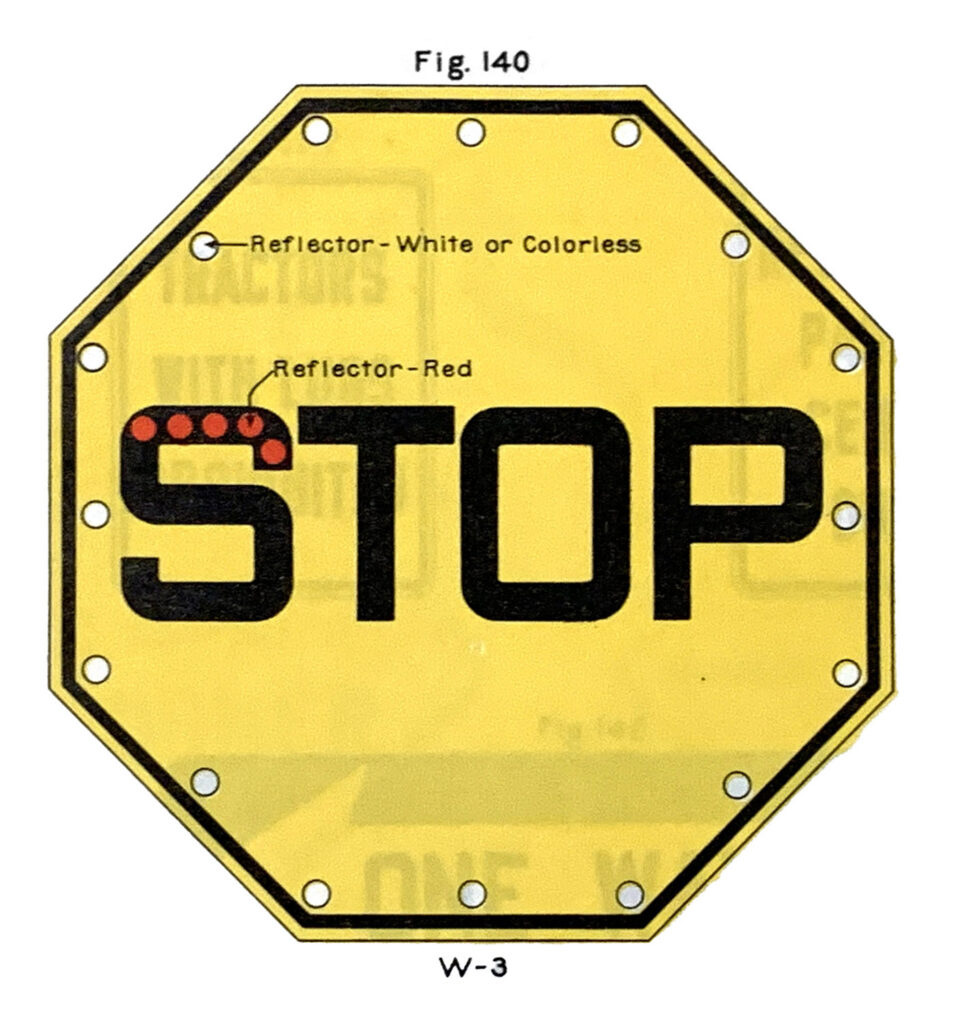
Yellow stop sign diagram from 1947 standard.
1947: Stop signs got larger, from 24 inches to 36 inches wide. The stop sign was originally yellow as it was considered a warning sign.
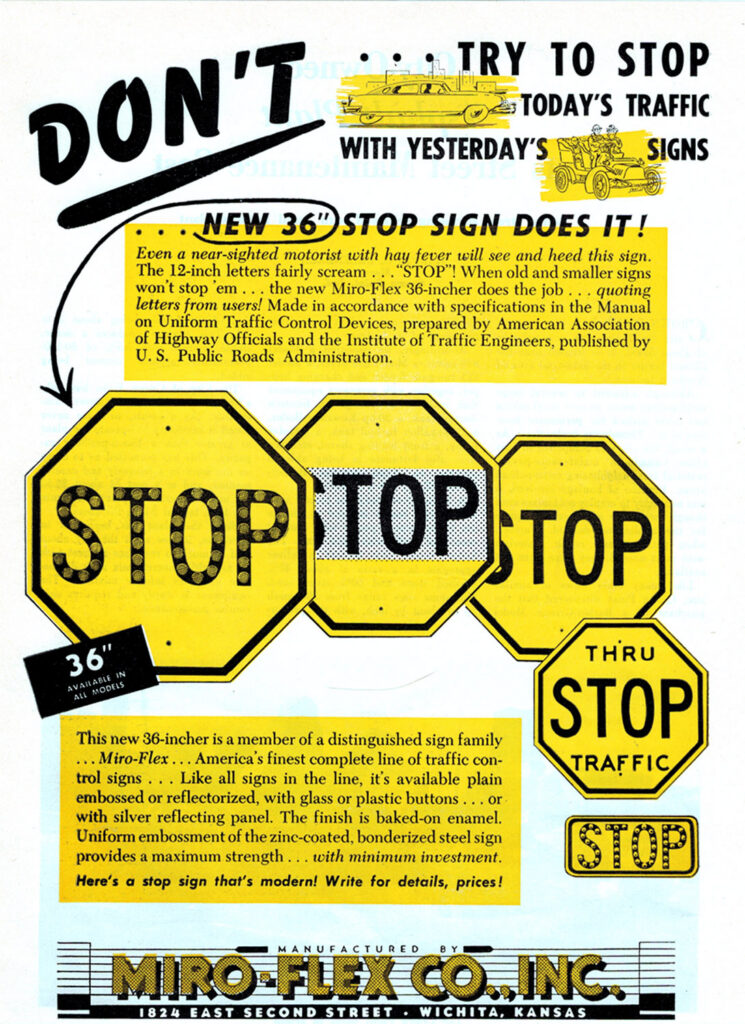
Advertisement for yellow stop signs.
Sign manufacturer advertisement circa 1950.
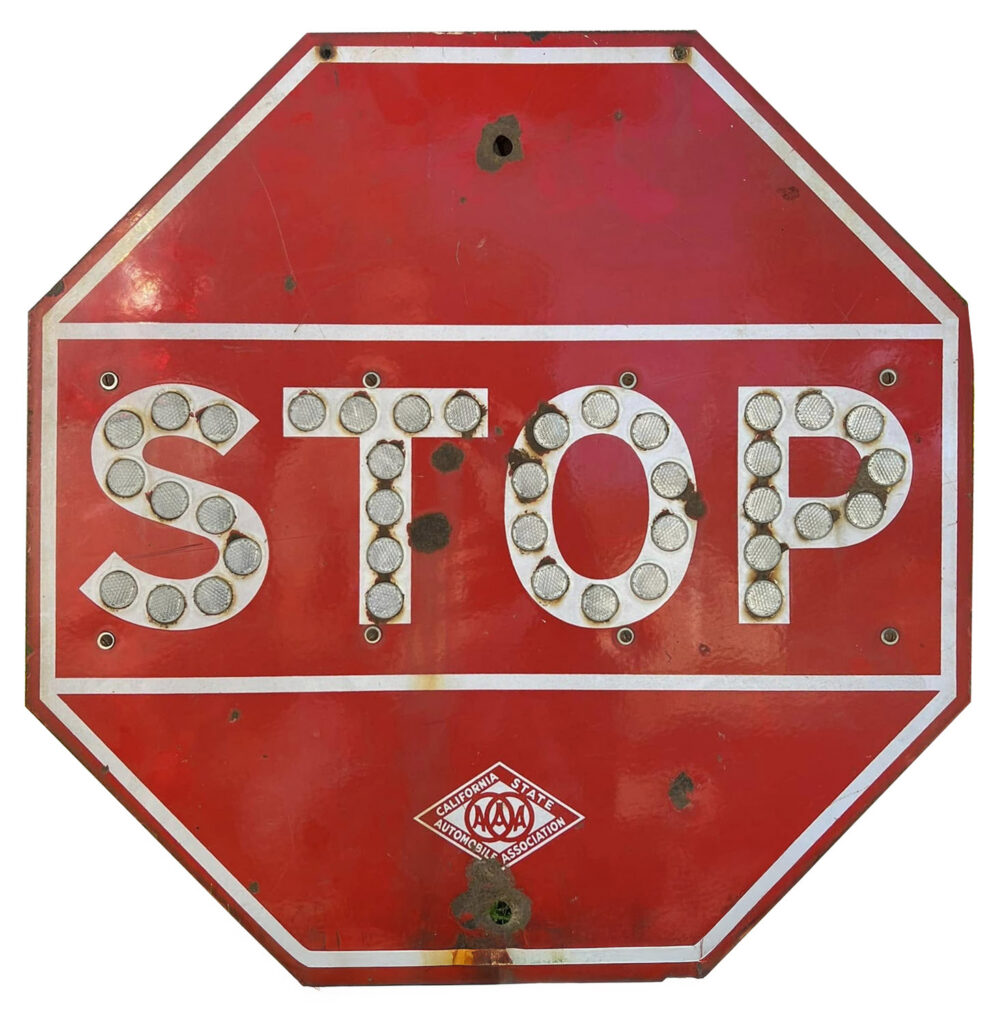
Red stop sign with reflective cataphote buttons.
c. 1940: Early California red stop sign sponsored by the California State Automobile Association featuring reflective cataphotes or “cat’s eyes” reflectors.
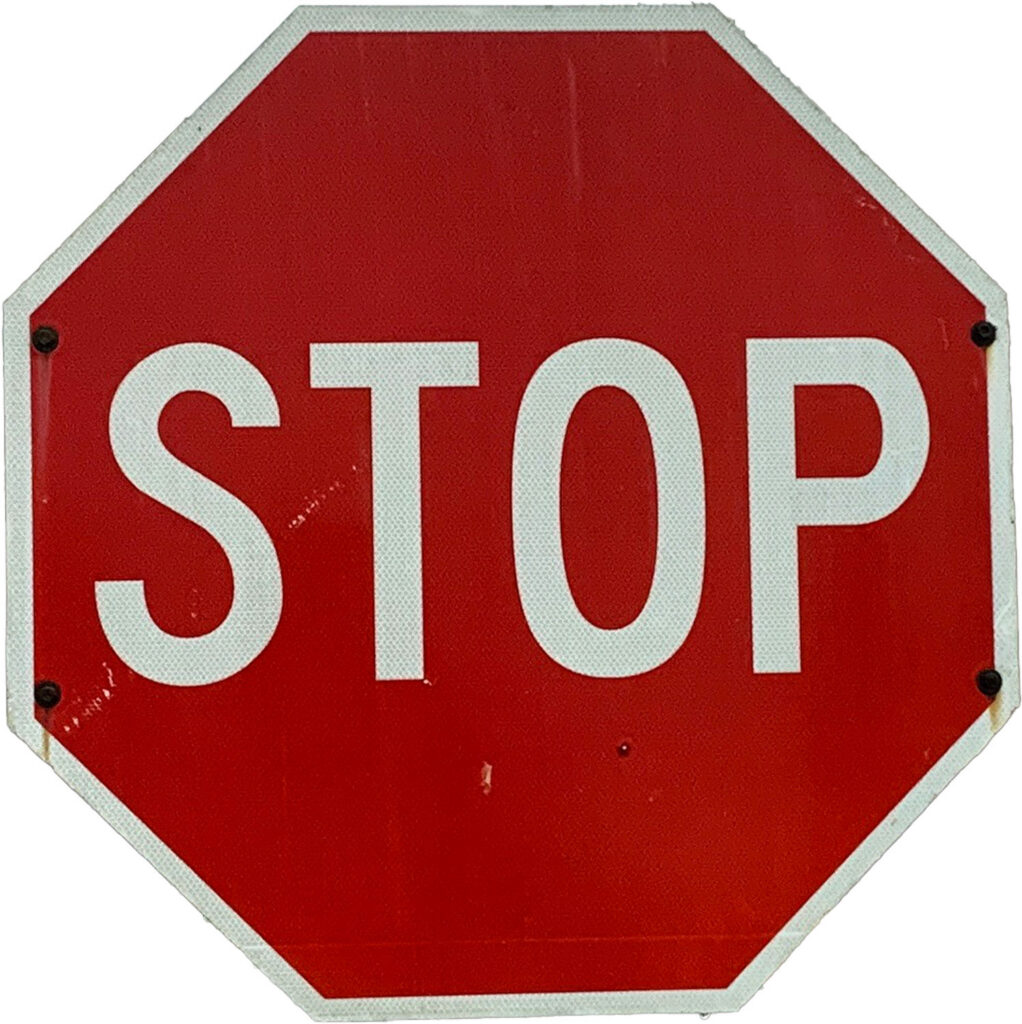
Modern red aluminum stop sign.
1954: The MUTCD establishes aluminum red stop signs as a national standard.
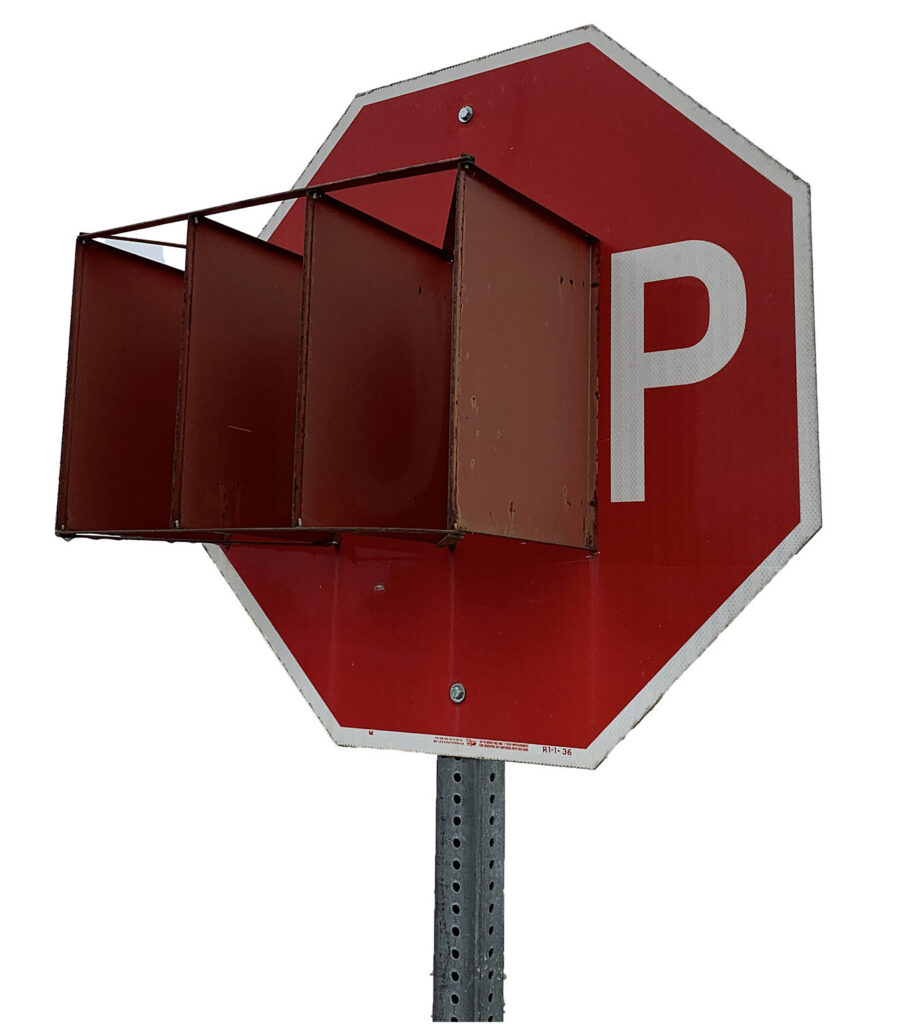
Red stop sign fitted with side blinders.
This stop sign in Granby, Missouri is equipped with blinders to protect night drivers at shallow-angled intersections where there is confusion over which road the sign applies to.

Video Explanation